Water as a Strategic Lever: India Signals Tough New Stance on Indus Waters Treaty with Pakistan
By ZPLUSE STAFF
•
Wednesday, June 10, 2026
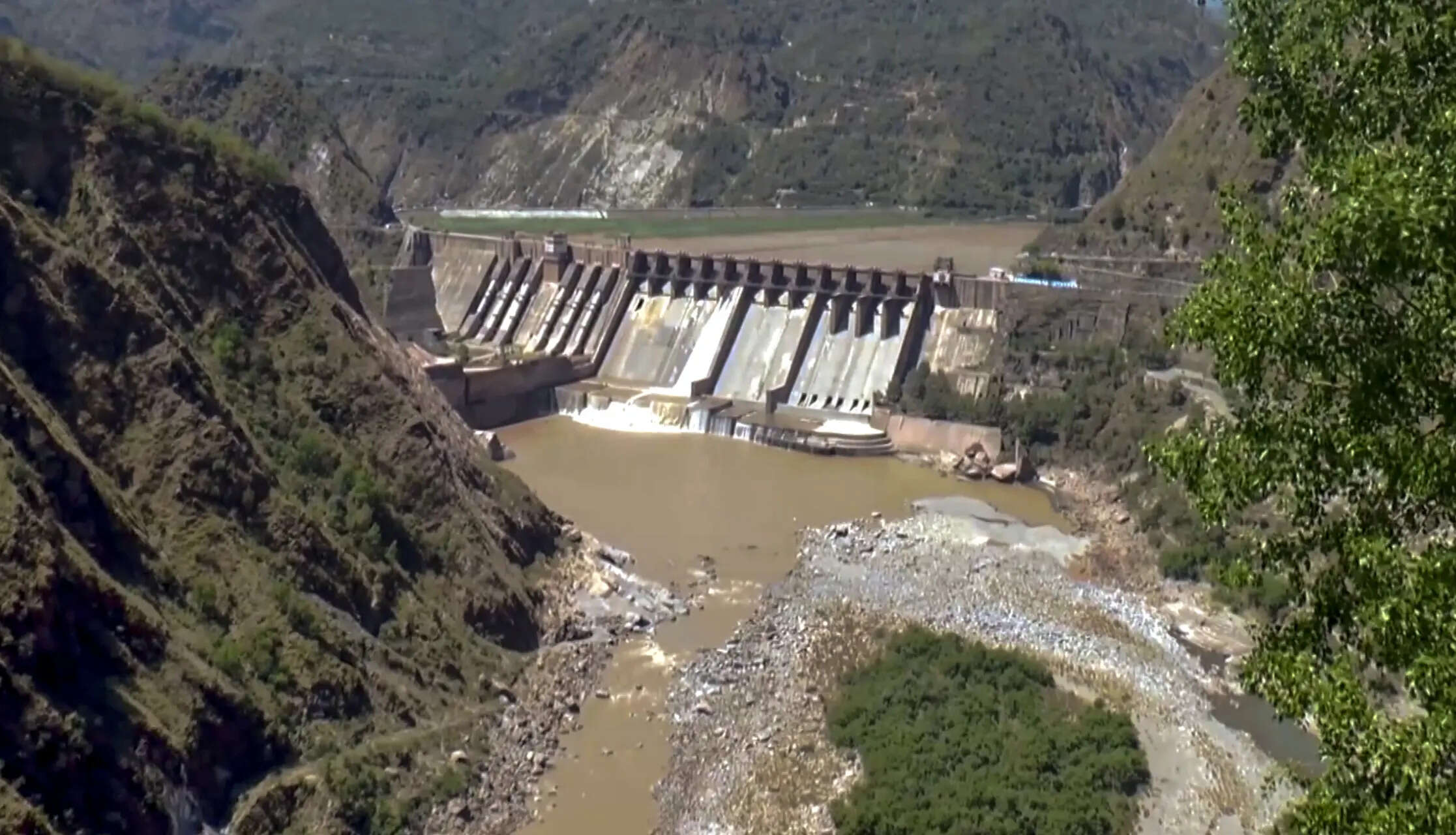
New Delhi: In one of its strongest statements yet on the future of the Indus Waters Treaty (IWT), the Indian government has declared that Pakistan will not receive “a single drop” of water beyond what is mandated under India’s sovereign rights, signaling a major shift in New Delhi’s approach toward one of the world’s most enduring water-sharing agreements.
The statement comes amid continuing tensions between India and Pakistan and reflects a growing consensus within India’s strategic establishment that water resources can no longer be viewed solely through the lens of diplomacy. Instead, policymakers increasingly see river management as an issue intertwined with national security, economic development, and regional geopolitics.
Signed in 1960 with the mediation of the World Bank, the Indus Waters Treaty has long been regarded as one of the most successful international water-sharing agreements. The treaty allocated the three eastern rivers—Ravi, Beas, and Sutlej—to India while granting Pakistan rights over the western rivers—Indus, Jhelum, and Chenab—subject to certain Indian usage provisions. Remarkably, the treaty survived multiple wars, military confrontations, and decades of political hostility between the two nuclear-armed neighbors.
However, India’s position has evolved significantly in recent years.
Government officials have increasingly argued that while India has faithfully honored the treaty for more than six decades, it has not fully utilized the water resources allocated to it under the agreement. As a result, New Delhi has accelerated efforts to develop dams, irrigation systems, hydropower projects, and water-storage infrastructure on rivers that fall within its legal entitlement.
The latest statement suggests that India intends to maximize every drop of water available under the treaty framework. Officials argue that water currently flowing unused into Pakistan from Indian territory represents a missed opportunity for agriculture, power generation, and development in states such as Jammu and Kashmir, Punjab, Haryana, Rajasthan, and Himachal Pradesh.
The renewed emphasis on water management is also being driven by growing concerns over climate change and water security. Rising temperatures, erratic rainfall patterns, shrinking glaciers, and increasing demand from agriculture and urban centers have transformed water into one of the most critical strategic resources of the twenty-first century. Policymakers believe that India must prioritize domestic requirements before allowing any surplus resources to flow across borders.
For Pakistan, the implications are potentially significant.
Pakistan’s agricultural sector and food security are heavily dependent on the Indus river system. A substantial portion of the country’s irrigation network relies on waters originating in territories upstream of the border. Consequently, any increase in India’s utilization of its treaty-entitled share is closely monitored in Islamabad.
Indian officials, however, maintain that their actions remain within the framework of international law and treaty obligations. The government’s position is that it is not seeking to violate the treaty but rather to fully exercise rights that have long remained underutilized. This distinction is important because India continues to project itself as a responsible stakeholder while simultaneously pursuing a more assertive water strategy.
The debate over the treaty has intensified since a series of terrorist attacks and border tensions strained bilateral relations. Successive Indian governments have argued that normal cooperation cannot continue indefinitely in an environment marked by cross-border terrorism and security challenges. The phrase “blood and water cannot flow together,” first articulated by Prime Minister Narendra Modi after the Uri attack in 2016, has increasingly shaped public and political discourse surrounding the treaty.
Experts note that India’s evolving approach reflects a broader trend in international relations, where control over natural resources is becoming a key element of national power. Just as energy security, rare earth minerals, and critical technologies have become strategic assets, water is increasingly viewed as a resource with geopolitical significance.
At the same time, analysts caution that water disputes are inherently sensitive. Rivers do not recognize political boundaries, and any changes in water-sharing arrangements can have long-term humanitarian, environmental, and diplomatic consequences. For this reason, many experts advocate balancing national interests with regional stability and sustainable resource management.
The government’s latest statement nevertheless sends a clear signal. India appears determined to ensure that every water resource legally available under the treaty contributes directly to domestic development, agricultural productivity, and energy security. Massive investments in canal modernization, hydropower projects, storage facilities, and river-linking infrastructure are expected to play a central role in this strategy over the coming years.
For Pakistan, the message is equally clear: New Delhi intends to maximize its treaty rights and will no longer tolerate what it views as the underutilization of its allocated water resources.
Whether this marks the beginning of a new chapter in the Indus Waters Treaty or merely a more assertive interpretation of existing provisions remains to be seen. What is certain, however, is that water has become an increasingly important instrument of statecraft in South Asia.
In a region where rivers sustain hundreds of millions of lives, the future of the Indus basin may prove to be as strategically important as any military or diplomatic development between the two neighboring nations.