Suvendu Adhikari Plans Revival of Historic Bengal Gorkha Force, Targets Mamata Government Over Hill Politics
By ZPLUSE STAFF
•
Wednesday, June 17, 2026
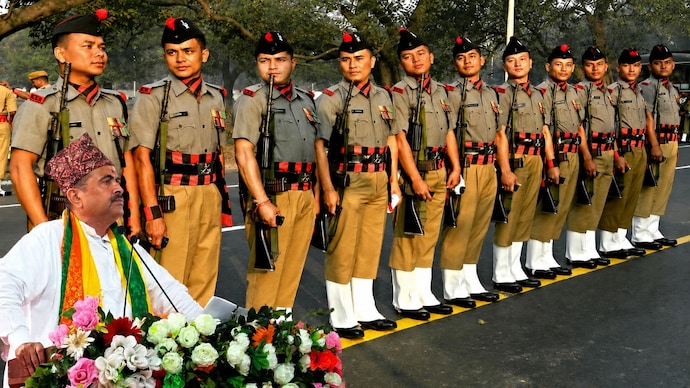
West Bengal Opposition Leader Suvendu Adhikari has announced plans to revive the historic Bengal Gorkha Force, a colonial-era military formation with deep roots in the Darjeeling hills, setting the stage for a fresh political battle over identity, security, and representation in the state’s sensitive hill regions. Adhikari accused the Mamata Banerjee government of deliberately weakening institutions linked to the Gorkha community and vowed to restore what he described as a proud legacy that previous governments had allowed to decline.
The announcement comes at a politically significant moment as parties intensify efforts to strengthen their influence in the Darjeeling hills, a region that has long witnessed demands for greater autonomy and, at times, a separate Gorkhaland state. By invoking the history of the Bengal Gorkha Force, Adhikari appears to be appealing to both regional pride and the distinguished military traditions associated with the Gorkha community.
The Bengal Gorkha Force traces its origins to the colonial period when Gorkha soldiers earned a formidable reputation for bravery and discipline in military service. Over the decades, Gorkha regiments became among the most celebrated units in the Indian Army, participating in major conflicts and earning numerous gallantry awards. The force’s legacy remains an important symbol of identity and pride for many residents of the Darjeeling hills and adjoining regions.
Adhikari alleged that the Trinamool Congress government under Chief Minister Mamata Banerjee neglected institutions connected to the Gorkha community and failed to adequately recognize their historical contributions. He claimed that the revival of the force would not only preserve an important heritage but also provide opportunities for youth and strengthen the connection between the hills and the broader national framework.
The proposal has immediately sparked political debate. BJP leaders have described the move as an effort to honour the sacrifices and contributions of Gorkha soldiers while creating new avenues for youth participation in disciplined service. They argue that such initiatives could help address longstanding concerns regarding employment, representation, and regional development in the hills.
The ruling Trinamool Congress, however, is likely to view the announcement through a political lens. Party leaders have frequently accused the BJP of attempting to exploit identity-based issues in the Darjeeling region for electoral gains. Trinamool representatives maintain that their government has worked extensively to promote development, improve infrastructure, and maintain peace in the hills after years of political unrest.
The Darjeeling region has remained one of West Bengal’s most politically sensitive areas for decades. Demands for a separate Gorkhaland state have periodically led to protests, strikes, and confrontations, making hill politics a crucial factor in both state and national elections. Political parties have therefore consistently sought to build strong relationships with the Gorkha community and its various organizations.
Analysts note that the symbolism behind the proposed revival may prove as important as the practical aspects. By highlighting military heritage and national service, the BJP is attempting to position itself as a party that recognizes and celebrates Gorkha contributions to India’s security and nation-building. Such messaging could resonate strongly among sections of the hill population that place considerable importance on military traditions.
The proposal also fits into a broader political strategy in which historical institutions, regional identities, and cultural symbols are increasingly becoming part of contemporary electoral narratives. Across India, parties have sought to revive historical memories and local pride as a means of strengthening political support among specific communities.
Whether the Bengal Gorkha Force can actually be revived in its historical form remains unclear, as questions regarding administrative structure, legal status, funding, and operational responsibilities would need to be addressed. Nevertheless, the announcement has already succeeded in drawing attention to the issue and reigniting discussions about the role of Gorkha identity in West Bengal’s political landscape.
For Suvendu Adhikari, the move represents another attempt to challenge Mamata Banerjee on terrain where regional sentiment and identity politics intersect. For the Trinamool Congress, it presents a fresh political challenge in a region that has often proven difficult for ruling governments to fully control.
As West Bengal’s political battle intensifies ahead of future elections, the debate over the Bengal Gorkha Force is likely to become about more than history alone. It will also be about competing visions for the future of the Darjeeling hills, the role of regional identities in state politics, and the continuing struggle for influence in one of India’s most strategically and politically significant mountain regions.