SpaceX’s Historic Liftoff: Elon Musk’s Company Raises Record $75 Billion in Biggest IPO Ever
By ZPLUSE STAFF
•
Friday, June 12, 2026
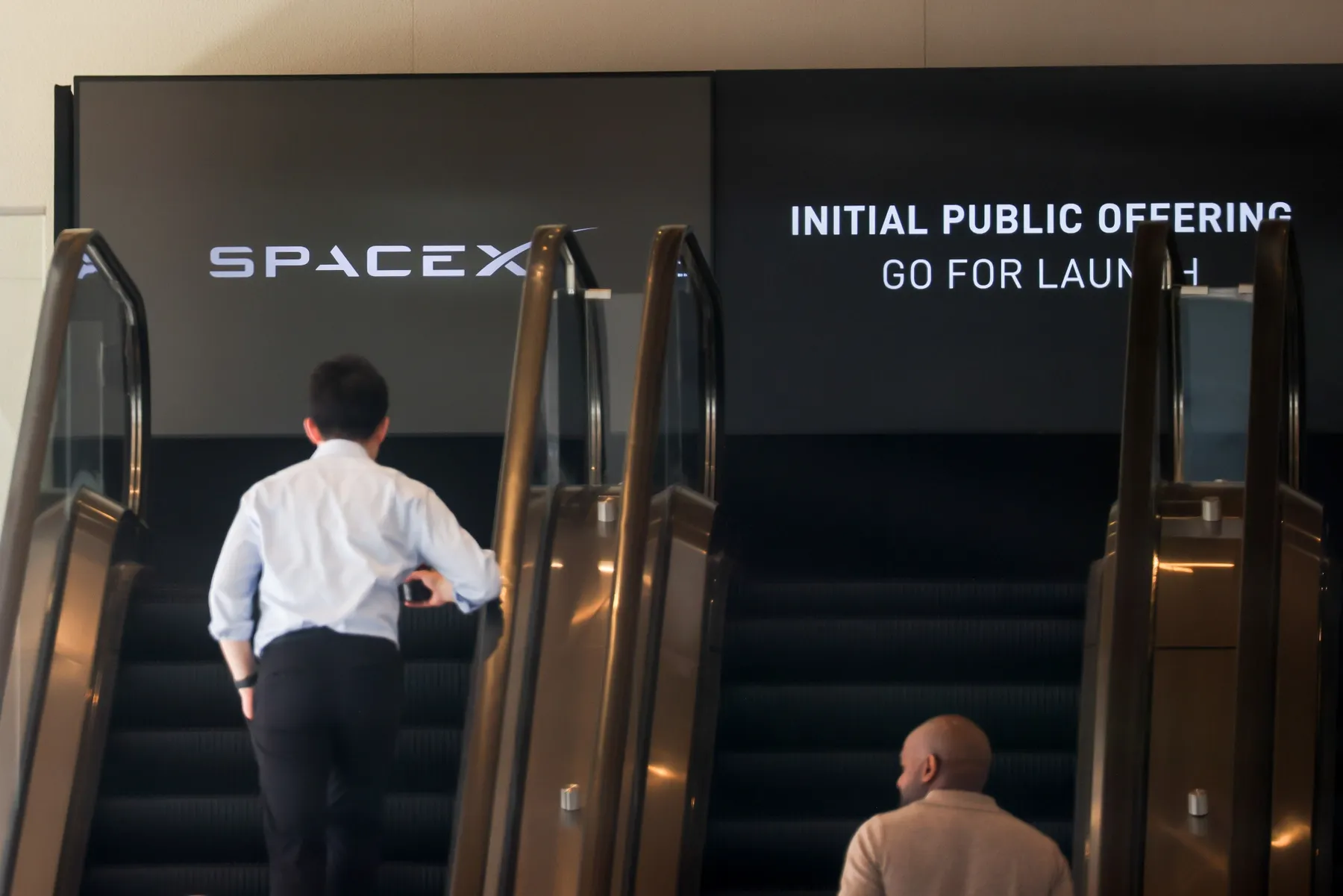
New York: Elon Musk’s SpaceX has rewritten Wall Street history by raising a staggering $75 billion in its initial public offering (IPO), making it the largest stock market debut ever recorded. The blockbuster listing values the space, satellite, and artificial intelligence giant at approximately $1.77 trillion, instantly placing it among the most valuable companies in the world and marking a defining moment in the evolution of the global space economy.
The company priced its shares at $135 each and sold more than 555 million shares, generating unprecedented investor demand from institutions and retail investors alike. The offering surpassed previous IPO records by a massive margin and highlighted the extraordinary confidence investors have placed in Musk’s vision of the future.
For SpaceX, the IPO represents the culmination of more than two decades of relentless innovation. Founded in 2002 with the ambitious goal of reducing the cost of space travel and eventually enabling human settlement on Mars, the company transformed itself from a startup struggling to launch rockets into the world’s dominant commercial space enterprise. Today, SpaceX operates the Falcon rocket family, the Dragon spacecraft, the Starlink satellite internet network, and the massive Starship program that forms the centerpiece of Musk’s Mars ambitions.
The enthusiasm surrounding the IPO extends far beyond rockets. Investors increasingly view SpaceX as a diversified technology company rather than merely a launch provider. Its Starlink satellite network has emerged as a major revenue generator, serving millions of customers worldwide and providing internet connectivity across remote regions. Industry analysts estimate that Starlink now accounts for a substantial share of the company’s revenues and is expected to remain a key growth engine for years to come.
Artificial intelligence has also become an important component of the SpaceX story. The integration of Musk’s AI ambitions through xAI has strengthened investor belief that the company could play a major role in future computing infrastructure, satellite-based data services, and space-enabled AI applications. Supporters argue that SpaceX is uniquely positioned at the intersection of three transformative industries space technology, telecommunications, and artificial intelligence.
The IPO has had profound implications for Elon Musk’s personal fortune. Already the world’s wealthiest individual before the listing, Musk retained overwhelming control of the company and continues to hold a dominant voting stake. Analysts estimate that the IPO has pushed his net worth into unprecedented territory, bringing him closer than ever to becoming the world’s first trillionaire.
The scale of investor interest has surprised even seasoned market observers. Demand for shares reportedly exceeded supply several times over, with both institutional and retail investors eager to secure a stake in what many regard as one of the defining technology companies of the century. The offering’s success reflects growing optimism about the commercial future of space exploration and the belief that space-based industries could become a major pillar of the global economy.
Yet the historic debut has not been without controversy. Critics argue that the company’s valuation remains difficult to justify based on traditional financial metrics. Despite rapid growth, SpaceX continues to invest heavily in expansion, research, and ambitious long-term projects. Skeptics caution that much of the company’s valuation is based on expectations of future breakthroughs rather than current profitability.
Supporters counter that conventional valuation methods may not fully capture the potential of a company seeking to reshape entire industries. They point to SpaceX’s dominance in commercial launches, its leadership in reusable rocket technology, its expanding satellite network, and its long-term plans for deep-space transportation as reasons for investor optimism.
The success of the IPO also signals a broader shift in global capital markets. Investors are increasingly willing to back companies pursuing transformative technologies and long-term visions rather than focusing solely on short-term profits. In many ways, SpaceX has become the ultimate test case for this new era of investing, where future potential commands extraordinary valuations.
For the United States, the IPO is being viewed as a triumph of innovation and private enterprise. SpaceX has played a central role in restoring American leadership in space launches, supporting NASA missions, supplying the International Space Station, and developing technologies that could eventually carry humans to the Moon and Mars. The company’s rise has fundamentally altered the economics of spaceflight and inspired a new generation of private-sector space ventures.
As trading begins and markets digest the largest IPO in history, one thing is clear: SpaceX is no longer just a rocket company. It has become a symbol of a future driven by private innovation, artificial intelligence, global connectivity, and humanity’s ambitions beyond Earth.
Whether the valuation ultimately proves justified remains to be seen. But for now, Wall Street has delivered its verdict. Investors have placed a historic bet not only on Elon Musk and SpaceX, but on the belief that the next great economic frontier may lie far beyond our planet.