The Rupee at 100: Why Economists Say the Number Matters Less Than the Narrative
By ZPLUSE STAFF
•
Friday, June 5, 2026
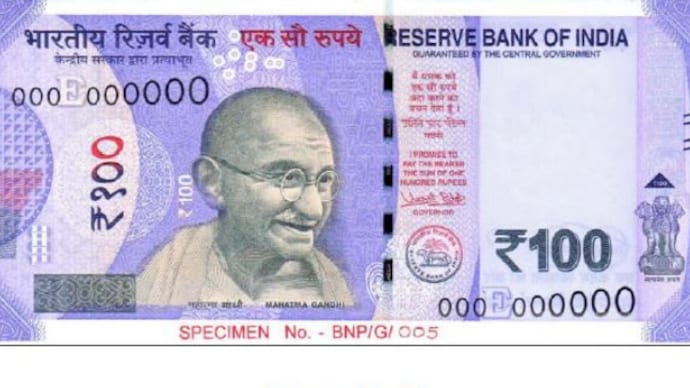
As the Indian rupee edges closer to the psychologically significant mark of 100 against the US dollar, concerns over the currency’s future have intensified across financial markets and public discourse alike. Headlines warning of a weakening rupee have fueled anxiety, with many viewing the three-digit exchange rate as a symbol of economic distress. However, a contrasting perspective has emerged from economist Dr. Shamika Ravi, a member of the Prime Minister’s Economic Advisory Council, who argues that the focus on the number itself may be misplaced.
Speaking on a recent podcast, Dr. Ravi dismissed the obsession with a specific exchange-rate milestone, suggesting that a rupee-dollar rate of 100 should not automatically be interpreted as a sign of economic weakness. According to her, exchange rates are ultimately market-determined values that reflect broader global realities rather than a simple report card on a country’s economic health. In her view, the fixation on a round number risks distracting attention from the actual forces driving currency movements.
Dr. Ravi’s argument is rooted in the belief that exchange rates function much like a pressure-release valve for economies facing external shocks. The global economy is currently grappling with supply-chain disruptions, geopolitical instability, volatile energy prices, and uncertainties surrounding major trade routes. These factors have placed pressure on currencies across the world, particularly those of energy-importing nations. Under such circumstances, she argues, allowing the currency to adjust naturally is often healthier than attempting to defend an artificial exchange-rate target.
The economist cautions that aggressive intervention to maintain a specific value for the rupee could create unintended consequences. Large-scale market interventions can deplete foreign exchange reserves, distort market signals, and potentially worsen inflationary pressures in the long run. A currency that reflects prevailing economic conditions, she contends, helps absorb external shocks and allows policymakers to focus on managing broader economic stability rather than chasing symbolic milestones.
According to this perspective, a depreciating rupee is not necessarily evidence of systemic failure. Rather, it may reflect global developments that are beyond the control of any single government. Rising crude oil prices, disruptions in international trade, and fluctuations in capital flows can all exert pressure on emerging-market currencies. The key challenge for policymakers is therefore not preventing every movement in the exchange rate but mitigating its impact on inflation, trade, and household finances.
Dr. Ravi has also emphasized the importance of responsible consumption and prudent economic management during periods of external stress. Measures aimed at reducing dependence on imports, encouraging efficient resource use, and strengthening domestic production can help cushion the economy against global volatility. Such strategies, she argues, are ultimately more effective than attempting to defend a particular exchange-rate level.
Critics, however, point out that currency depreciation carries real consequences for consumers and businesses. A weaker rupee can increase the cost of imported goods, fuel inflation, and raise expenses for industries dependent on foreign inputs. For ordinary citizens, the impact may be felt through higher prices and reduced purchasing power. These concerns explain why exchange-rate movements continue to attract intense public attention.
Yet Dr. Ravi’s central message remains that economic resilience should be judged by a country’s ability to withstand external shocks, not by whether its currency remains below an arbitrary numerical threshold. In a world increasingly shaped by geopolitical tensions and global economic uncertainty, market-driven adjustments may be a sign of adaptation rather than weakness.
As the debate over the rupee continues, one question remains at the heart of the discussion: should India focus on defending a symbolic exchange-rate level, or should it prioritize navigating the broader economic forces that are reshaping the global financial landscape? For proponents of Dr. Ravi’s view, the answer is clear—the health of an economy is determined by its fundamentals, not by a number flashing on a currency screen.