A Quiet Nuclear Shift: SIPRI Report Suggests India May Have Deployed Nuclear Warheads for the First Time
By zpluse staff
•
Wednesday, June 10, 2026
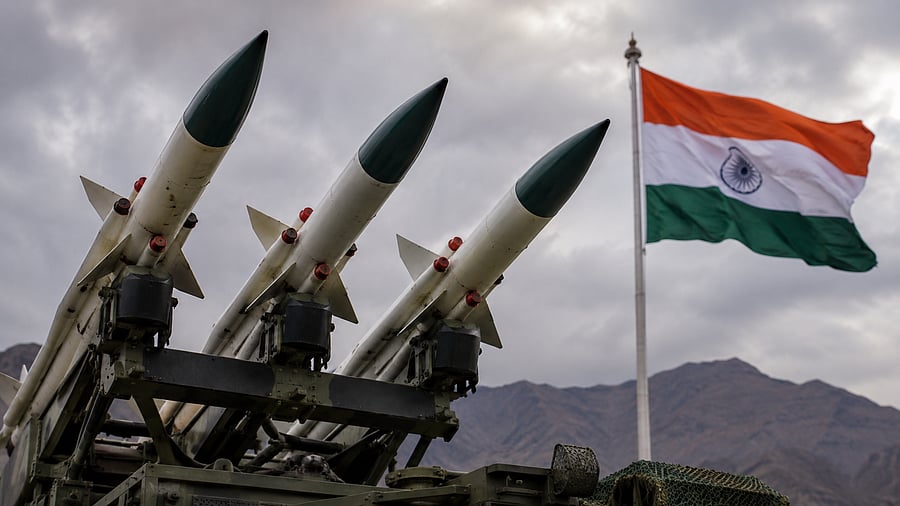
New Delhi: India may have entered a new phase in its nuclear deterrence strategy. According to the latest assessment by the Stockholm International Peace Research Institute (SIPRI), India is estimated to possess around 190 nuclear warheads in 2025, up from approximately 180 a year earlier. More significantly, the report suggests that India may have deployed around 12 nuclear warheads on operational delivery systems during peacetime, marking what could be a major shift in the country’s nuclear posture.
For decades, India’s nuclear doctrine has been built around the principles of “credible minimum deterrence” and a declared “No First Use” policy. Unlike some nuclear powers that maintain large numbers of warheads on high alert, India traditionally kept its nuclear warheads separated from delivery systems during peacetime. This approach was intended to reduce risks of accidental use while ensuring sufficient retaliatory capability in the event of a nuclear attack.
The SIPRI assessment indicates that India may now be moving toward a more operationally ready deterrent posture. While the number—12 deployed warheads—is relatively small compared to the arsenals of major nuclear powers, the significance lies not in the quantity but in the strategic message. For the first time, a portion of India’s nuclear arsenal may be available for immediate deployment, enhancing the credibility and responsiveness of its deterrent.
Defence analysts believe this development is closely linked to India’s progress in building a complete nuclear triad. A nuclear triad refers to the ability to launch nuclear weapons from land-based missiles, aircraft, and submarines. India has spent years developing this capability, particularly through the induction of nuclear-powered ballistic missile submarines such as INS Arihant and the advancement of longer-range missile systems. The deployment of operational warheads may reflect the maturation of these capabilities.
The evolving security environment in Asia also provides important context. India faces two nuclear-armed neighbors—China and Pakistan—both of whom continue to modernize and expand their strategic arsenals. China’s rapid military modernization, development of advanced missile systems, and expansion of its nuclear forces have increasingly become factors in India’s strategic calculations. Pakistan, meanwhile, continues to maintain a growing stockpile of tactical and strategic nuclear weapons.
SIPRI’s report suggests that India’s nuclear modernization is not focused on matching rivals weapon for weapon but on ensuring the survivability and credibility of its deterrent. Modern deterrence is no longer measured solely by the number of warheads. It increasingly depends on the ability to guarantee a second-strike capability—that is, the capacity to retaliate even after suffering a nuclear attack. This is where submarine-based deterrence plays a crucial role, as submarines are far more difficult to detect and neutralize.
The report also highlights a broader global trend. Nuclear arsenals around the world are once again expanding after decades of post-Cold War reductions. Major powers including the United States, Russia, and China are investing heavily in modernization programs. Regional powers are similarly upgrading missile technologies, command systems, and delivery platforms. The international security environment is increasingly being shaped by strategic competition and geopolitical tensions.
For India, the reported deployment does not necessarily indicate a change in doctrine. Government officials have not announced any revision to the country’s No First Use policy or its commitment to credible minimum deterrence. Instead, analysts argue that operational deployment may simply represent an effort to make existing deterrence more effective and survivable in an era of evolving threats.
The development nevertheless carries symbolic importance. Since conducting nuclear tests in 1998, India has sought to present itself as a responsible nuclear power that balances strategic necessity with restraint. Any move toward greater operational readiness is therefore likely to attract attention from both supporters and critics. Proponents argue that a credible deterrent is essential in an increasingly unstable region, while critics warn that greater deployment could contribute to an arms race and increase regional tensions.
Despite the headline-grabbing nature of the report, experts caution against interpreting the figures as evidence of aggressive nuclear expansion. India’s estimated arsenal remains significantly smaller than those of the world’s largest nuclear powers, and its strategic focus continues to emphasize deterrence rather than warfighting. The deployment of a limited number of warheads is best understood as part of a gradual evolution in posture rather than a dramatic departure from established policy.
The SIPRI findings ultimately underscore a changing reality in Asian security dynamics. As military technologies advance and geopolitical competition intensifies, nuclear deterrence is becoming increasingly complex. For India, maintaining a balance between strategic preparedness and responsible stewardship will remain one of the defining challenges of its national security policy.
If the report’s assessment is accurate, 2025 may be remembered as the year India quietly crossed an important threshold—not by dramatically expanding its arsenal, but by making its nuclear deterrent more operational, more survivable, and more aligned with the realities of twenty-first-century strategic competition.