A Political Milestone: Narendra Modi Becomes India’s Longest-Serving Elected Prime Minister
By ZPLUSE STAFF
•
Thursday, June 11, 2026
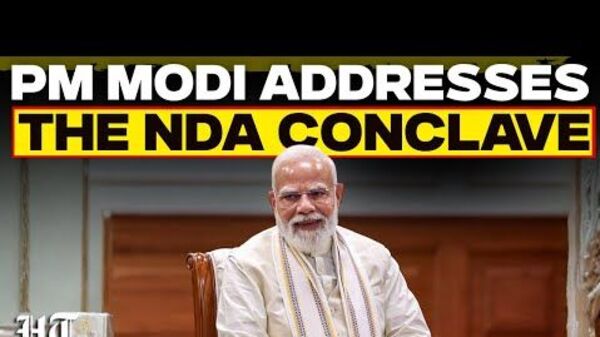
New Delhi: Prime Minister Narendra Modi has etched his name deeper into India’s political history by becoming the country’s longest-serving elected Prime Minister, surpassing a record that stood for decades. The milestone marks another chapter in a political journey that has transformed not only the Bharatiya Janata Party (BJP) but also the broader landscape of Indian politics.
With more than twelve years continuously in office since first assuming the Prime Ministership in May 2014 and securing electoral victories in 2014, 2019, and 2024, Modi has now served longer as an elected Prime Minister than any of his predecessors. The achievement underscores the extraordinary political dominance he has exercised over the past decade and reflects a level of electoral success rarely witnessed in modern democratic politics.
The distinction is particularly significant because it applies to elected tenure. While India’s first Prime Minister, Jawaharlal Nehru, remains the longest-serving Prime Minister overall, having governed from 1947 until his death in 1964, part of that tenure came before India’s first general election in 1952. Modi’s record specifically recognizes continuous service based entirely on electoral mandates received directly from the Indian people.
Few leaders in contemporary global politics have maintained such a sustained level of public support. Since 2014, Modi has led the BJP through three consecutive national election victories, expanding the party’s influence into regions that were once considered difficult territory. Under his leadership, the BJP evolved from a party with strongholds in select regions into a truly pan-Indian political force.
Supporters view the milestone as evidence of Modi’s enduring popularity and his ability to connect with diverse sections of Indian society. They point to initiatives such as infrastructure expansion, digital governance, financial inclusion, welfare schemes, defense modernization, and India’s growing global profile as key reasons behind his continued electoral success. Projects ranging from highways and airports to digital payment systems and social welfare programs have been central to the government’s narrative of development and transformation.
The Prime Minister’s tenure has also coincided with a period of major geopolitical shifts. Under Modi’s leadership, India has sought to strengthen its position as a leading global power, expanding strategic partnerships with countries across the world while maintaining an independent foreign policy. India’s growing influence in forums such as the G20, Quad, BRICS, and other international platforms has become a defining feature of the period.
Economically, Modi’s years in office have witnessed both significant achievements and major challenges. India emerged as one of the world’s fastest-growing major economies, expanded its manufacturing ambitions, accelerated digitalization, and increased infrastructure spending. At the same time, the government navigated events such as the COVID-19 pandemic, global supply chain disruptions, inflationary pressures, and geopolitical conflicts affecting energy and commodity markets.
Politically, the Modi era has fundamentally altered the nature of electoral competition in India. Campaigns have increasingly revolved around leadership, national identity, welfare delivery, and governance performance. The BJP’s electoral machinery, organizational strength, and communication strategy under Modi’s leadership have become subjects of study for political analysts worldwide.
Critics, however, argue that the period has also witnessed growing political polarization and intense debates over institutional autonomy, federal relations, civil liberties, and the balance between development and democratic accountability. These discussions have become a prominent part of India’s contemporary political discourse and are likely to shape assessments of Modi’s legacy for years to come.
Regardless of political perspective, the historical significance of the milestone is difficult to dispute. In a country as diverse, complex, and politically competitive as India, maintaining electoral dominance over three consecutive general elections is an exceptionally rare achievement. The ability to sustain public support across multiple economic cycles, social transformations, and geopolitical developments speaks to the unique political position Modi has occupied in Indian public life.
The milestone also highlights the remarkable journey of a leader who rose from humble beginnings in Gujarat to become one of the most influential figures in India’s post-independence history. From serving as Chief Minister of Gujarat to leading the world’s largest democracy, Modi’s political trajectory has become one of the defining stories of contemporary India.
As he enters another phase of his tenure, the challenges ahead remain significant. Sustaining economic growth, creating employment opportunities, managing demographic changes, navigating global uncertainties, and maintaining India’s rise on the world stage will continue to test the government in the years ahead.
For now, however, the record stands as a symbol of political endurance and electoral success. Whether viewed through the lens of governance, ideology, development, or democratic politics, Narendra Modi’s emergence as India’s longest-serving elected Prime Minister represents a landmark moment in the history of the republic.
In a nation known for its vibrant democracy and constantly evolving political landscape, such longevity is rare. And it is a reminder that few leaders have shaped twenty-first-century India as profoundly as Narendra Modi.