Philippines’ Longest Night: Survivors Face Fear and Uncertainty Amid Continuous Aftershocks
By ZPLUSE STAFF
•
Tuesday, June 9, 2026
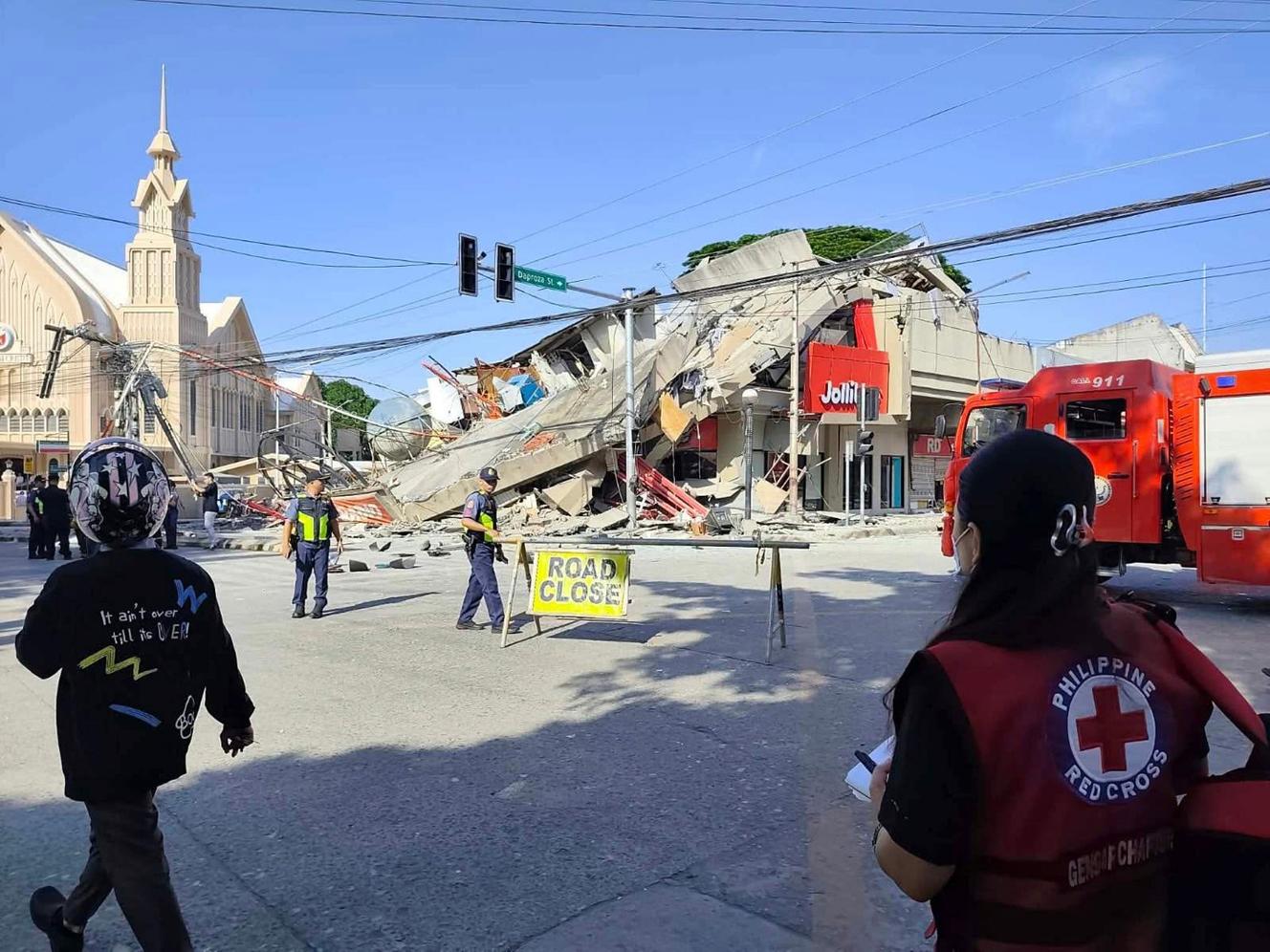
Manila: The Philippines remains gripped by fear and uncertainty following a devastating earthquake that has been followed by hundreds of aftershocks, forcing thousands of survivors to spend sleepless nights outdoors as rescue teams race against time to find those trapped beneath collapsed structures. Authorities have warned that the death toll is likely to rise as emergency workers gain access to remote and heavily damaged areas where communication remains disrupted.
The powerful earthquake struck without warning, sending buildings swaying violently and triggering scenes of panic across multiple provinces. Residents rushed into open spaces as homes, offices, schools, and public infrastructure suffered varying degrees of damage. However, the disaster did not end with the initial tremor. In the hours and days that followed, hundreds of aftershocks continued to shake the region, creating fresh fears and complicating ongoing rescue operations.
For many survivors, the greatest challenge has become the uncertainty. Every aftershock brings renewed panic, forcing families to remain in temporary shelters, evacuation centers, and open fields rather than return to buildings that may have been structurally weakened. Many residents describe the experience as living in constant fear, unsure whether another major tremor could strike at any moment.
Emergency response teams have launched large-scale search and rescue operations in the worst-affected regions. Firefighters, military personnel, police officers, disaster response units, and volunteers are working around the clock to locate survivors trapped beneath rubble. Heavy machinery has been deployed to clear collapsed buildings, while medical teams continue treating hundreds of injured residents.
Officials have acknowledged that the casualty count is expected to increase as rescue efforts continue. Several communities remain difficult to access due to damaged roads, landslides, and disrupted communication networks. In some locations, rescuers are relying on manual equipment and local volunteers to reach isolated victims.
The continuing aftershocks have emerged as a major obstacle to rescue efforts. Each significant tremor forces emergency workers to suspend operations temporarily because unstable structures could collapse further, endangering both survivors and rescuers. Experts warn that aftershocks are a natural consequence of major earthquakes and may continue for weeks as the Earth’s crust gradually stabilizes.
The humanitarian impact is growing rapidly. Thousands of families have been displaced from their homes, while shortages of clean water, electricity, food supplies, and medical resources have been reported in several affected districts. Relief agencies are distributing emergency supplies, including drinking water, food packets, medicines, blankets, and temporary shelter materials to displaced residents.
The Philippines is particularly vulnerable to such disasters due to its location on the Pacific Ring of Fire, one of the world’s most active seismic regions. The country experiences frequent earthquakes and volcanic activity because it sits along major tectonic plate boundaries. While disaster preparedness has improved over the years, the scale of the latest earthquake has once again exposed the challenges of protecting densely populated communities from powerful natural forces.
Government agencies have begun conducting detailed assessments of infrastructure damage, with preliminary reports indicating extensive losses to homes, schools, hospitals, bridges, and public facilities. Economists warn that reconstruction costs could run into billions of dollars, placing additional strain on local governments and affected communities already struggling to recover.
International humanitarian organizations and neighboring countries have also offered assistance as the Philippines confronts the growing crisis. Rescue specialists, emergency supplies, and technical support are being mobilized to strengthen local response efforts and accelerate relief operations.
Seismologists continue monitoring the situation closely, warning that while aftershock activity is expected to gradually decrease over time, strong tremors remain possible. Authorities have urged citizens to remain alert, avoid damaged structures, and follow official safety advisories.
As darkness falls each night, thousands of survivors continue to sleep under makeshift tents, in evacuation centers, or beneath the open sky. For many families, the trauma of the earthquake is compounded by the constant fear of what may come next. The ground may no longer be shaking as violently as it did during the initial quake, but the uncertainty remains.
For the Philippines, the coming days will be crucial. Rescue teams remain focused on saving lives, relief agencies are working to support displaced communities, and authorities are preparing for a long recovery process. Yet amid the devastation, stories of resilience, courage, and community solidarity continue to emerge, offering hope in one of the nation’s most difficult moments.
As hundreds of aftershocks continue to rattle the region, one reality remains clear: for many survivors, this has become the longest night of their lives.