Passport Is Not Proof of Citizenship, Clarifies Centre Amid Growing Legal Debate
By ZPLUSE STAFF
•
Thursday, June 25, 2026
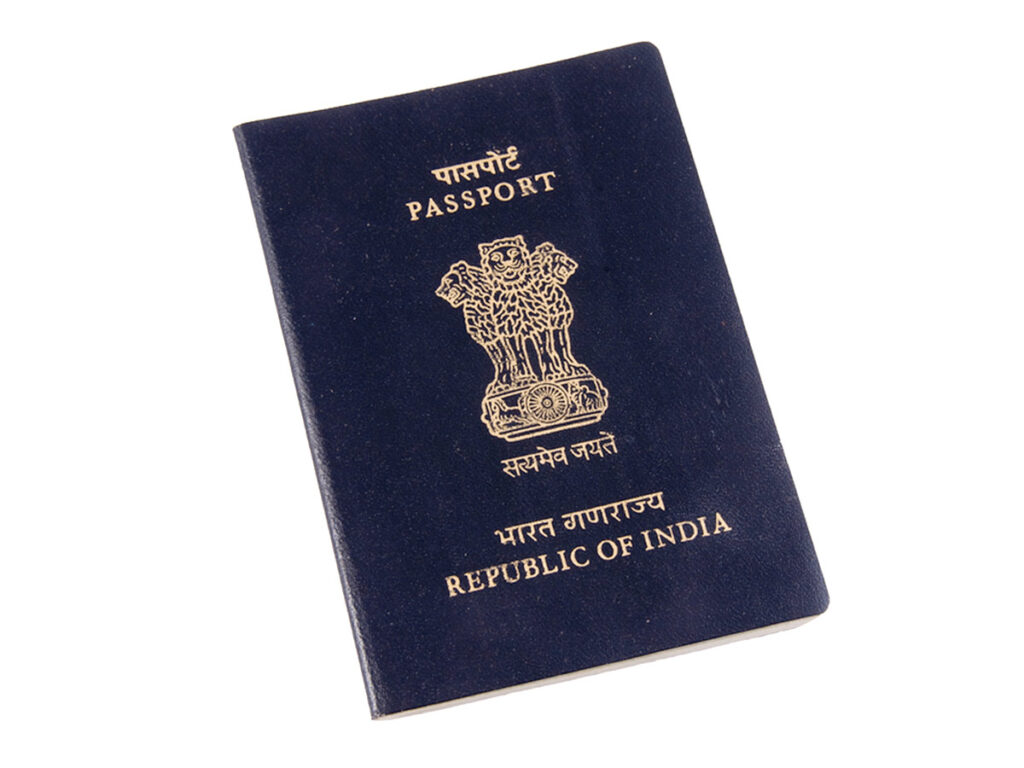
New Delhi: The Ministry of External Affairs (MEA) has clarified that an Indian passport should be regarded as a travel document and not as conclusive proof of Indian citizenship, a statement that has sparked widespread legal and public discussion over the distinction between identity, nationality, and citizenship under Indian law. The clarification comes amid ongoing court proceedings and renewed debates surrounding the documents required to establish citizenship in India.
According to the MEA, a passport is issued primarily to facilitate international travel and to certify that its holder is entitled to seek protection from the Government of India while abroad. While the issuance of a passport generally follows verification of an applicant’s credentials, the ministry emphasized that the document by itself does not constitute definitive legal proof of citizenship in all circumstances.
The clarification highlights an important distinction in Indian law. Citizenship is governed by the Citizenship Act, 1955, and related constitutional provisions, whereas passports are issued under the Passports Act, 1967. Although only Indian citizens are ordinarily eligible to receive an Indian passport, the existence of a passport alone does not automatically settle disputes relating to citizenship if questions arise regarding fraud, misrepresentation, or eligibility.
Government officials explained that citizenship may need to be established through various legally recognized documents and verification processes depending on the nature of a particular case. Birth records, citizenship certificates, naturalization documents, domicile records, and other official evidence may be examined by competent authorities whenever citizenship status is challenged or requires legal determination.
The Centre’s clarification assumes significance because passports are commonly perceived by the public as the highest form of identity documentation. In practice, passports are widely accepted for identity verification, address proof, financial transactions, visa applications, and international travel. However, legal experts note that acceptance for administrative purposes is different from serving as conclusive evidence of citizenship before a court or statutory authority.
The issue has gained prominence in the context of ongoing legal disputes involving citizenship verification, immigration matters, and cases concerning fraudulent acquisition of passports. Authorities have, on several occasions, cancelled passports after discovering that they had been obtained using forged documents or false declarations, even though the passport had initially been validly issued.
Legal experts point out that the MEA’s position is consistent with established legal principles. Courts have repeatedly observed that a passport creates a presumption regarding nationality but is not an irrefutable determination of citizenship. If credible evidence emerges suggesting that a passport was obtained through concealment or misrepresentation, authorities retain the power to investigate the matter and, where appropriate, revoke the document.
The clarification is also expected to influence broader public discussions on documentation and citizenship. Over the past several years, debates surrounding the National Register of Citizens (NRC), the Citizenship Amendment Act (CAA), and verification procedures have drawn attention to the legal distinction between various identity documents issued by the government.
Constitutional experts stress that citizenship is ultimately a legal status determined by constitutional provisions and statutory law rather than by possession of any single document. Different documents serve different administrative purposes, and no individual document necessarily establishes every legal right or status under all circumstances.
The Ministry has sought to reassure citizens that the clarification should not be interpreted as diminishing the importance or validity of passports for international travel. Indian passports remain official government documents recognized worldwide and continue to serve as the primary travel document for Indian nationals. The clarification merely distinguishes their function as travel documents from the legal process of determining citizenship in disputed cases.
The development has generated considerable interest among legal scholars and policy analysts, many of whom believe that greater public awareness is needed regarding the different purposes served by identity documents. They argue that misunderstanding these distinctions often leads to confusion during legal proceedings and administrative processes.
As discussions continue, the Centre’s clarification underscores a fundamental principle of Indian law: while an Indian passport is a powerful document that enables international travel and reflects government recognition of its holder, the ultimate determination of citizenship rests on the provisions of the Constitution, the Citizenship Act, and the competent legal authorities empowered to interpret them.
The statement is likely to become an important reference in future legal proceedings involving nationality and citizenship, reinforcing the distinction between proof of identity, proof of nationality, and proof of citizenship within India’s legal framework.