Pakistan Eyes Return to Bay of Bengal: Submarine Deployment Plan Revives Memories of 1971 Naval Defeat
By ZPLUSE STAFF
•
Thursday, June 18, 2026
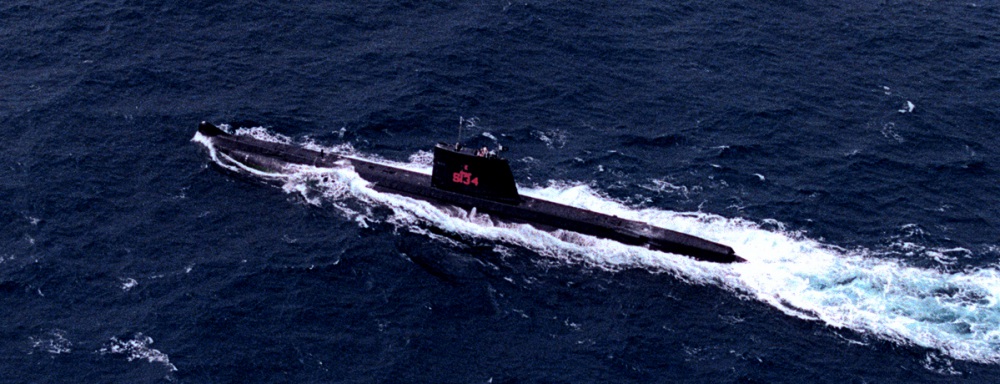
In a move that has attracted significant attention among strategic and defence circles, Pakistan is reportedly planning to deploy submarines in the Bay of Bengal for the first time since the 1971 Indo-Pak war. The development marks a potentially important shift in Pakistan’s maritime strategy and reflects Islamabad’s growing interest in expanding its naval footprint beyond the Arabian Sea into the wider Indo-Pacific region.
The Bay of Bengal occupies a critical position in the geopolitical landscape of South Asia. Bordered by India, Bangladesh, Myanmar, and key international shipping routes, the region has emerged as one of the most strategically important maritime zones in the world. It serves as a gateway to Southeast Asia and plays a crucial role in global trade, energy transportation, and naval operations.
For Pakistan, any submarine deployment into the Bay of Bengal would carry considerable symbolic significance. The region remains closely associated with the events of the 1971 war, when the Pakistan Navy suffered one of the most devastating defeats in its history. During the conflict, Pakistan’s eastern wing was geographically isolated from the western half of the country, making naval operations extremely difficult. The Indian Navy successfully established maritime dominance, blockaded East Pakistan, and supported military operations that ultimately contributed to the creation of Bangladesh.
The memory of 1971 continues to influence strategic thinking in both India and Pakistan. For Islamabad, operating submarines in the Bay of Bengal would represent an attempt to demonstrate that the geographical and military limitations exposed during the war no longer define its naval capabilities. Advances in submarine technology, longer operational ranges, and enhanced maritime cooperation with strategic partners have significantly expanded Pakistan’s naval reach compared to five decades ago.
The reported deployment plans come as Pakistan continues to modernize its submarine fleet with Chinese assistance. The acquisition of advanced Hangor-class submarines is expected to substantially improve Pakistan Navy’s underwater warfare capabilities. These vessels are designed to operate over extended distances, carry advanced weapons systems, and conduct intelligence, surveillance, and deterrence missions far from home waters.
Defence analysts view the Bay of Bengal initiative as part of a broader Pakistani effort to expand its strategic options in the Indian Ocean Region. Traditionally, Pakistan’s naval focus has centered on the Arabian Sea, where its major ports, naval bases, and maritime interests are concentrated. However, the evolving regional security environment has encouraged Islamabad to think beyond its conventional operational theatre.
The move also reflects the growing strategic competition unfolding across the Indian Ocean. Regional navies are increasingly investing in submarines, aircraft carriers, surveillance systems, and long-range maritime capabilities. As China expands its presence and India strengthens its naval infrastructure, smaller regional powers are also seeking ways to protect their interests and project influence.
From India’s perspective, any Pakistani submarine activity in the Bay of Bengal would be closely monitored. The eastern maritime theatre has historically been regarded as an area where India enjoys significant strategic advantages due to geography, infrastructure, and naval deployments. The Indian Navy maintains extensive capabilities across the eastern seaboard, including bases, surveillance networks, anti-submarine warfare assets, and strategic facilities.
However, military experts caution against viewing the reported deployment as a direct challenge to India’s dominance in the region. Given the vast disparity in naval strength and infrastructure, Pakistan’s objective may be less about altering the strategic balance and more about demonstrating operational reach and strategic flexibility. Even limited submarine deployments can provide valuable training, intelligence-gathering opportunities, and diplomatic messaging.
Another important factor is the growing role of China in regional maritime affairs. Pakistan’s naval modernization has been heavily supported by Beijing, and analysts believe that Chinese technology and operational concepts are influencing Pakistan’s evolving maritime doctrine. This has led some observers to view the planned deployment through the broader lens of Indo-Pacific geopolitics rather than as a purely bilateral India-Pakistan issue.
The Bay of Bengal itself has become increasingly crowded with naval activity. India, Bangladesh, Myanmar, the United States, Japan, Australia, and several European powers have all expanded their maritime engagement in the region. The presence of additional submarines, even in small numbers, contributes to a more complex strategic environment requiring enhanced surveillance and coordination.
For Pakistan, the reported plan is ultimately about signaling capability. By demonstrating the ability to operate in waters that were once associated with one of its greatest military setbacks, Islamabad seeks to project an image of a more confident and capable navy. Whether the deployment becomes a regular feature of Pakistan’s maritime strategy remains to be seen, but its symbolic value is already evident.
More than five decades after the 1971 war reshaped South Asia, the Bay of Bengal remains a theatre where history and strategy intersect. Pakistan’s reported submarine deployment plans suggest that old memories continue to influence modern military calculations, even as new geopolitical realities redefine the maritime balance of the region.