NEET Re-Test Under Tight Security: Thousands of Aspirants Appear Amid Efforts to Restore Trust
By ZPLUSE STAFF
•
Sunday, June 21, 2026
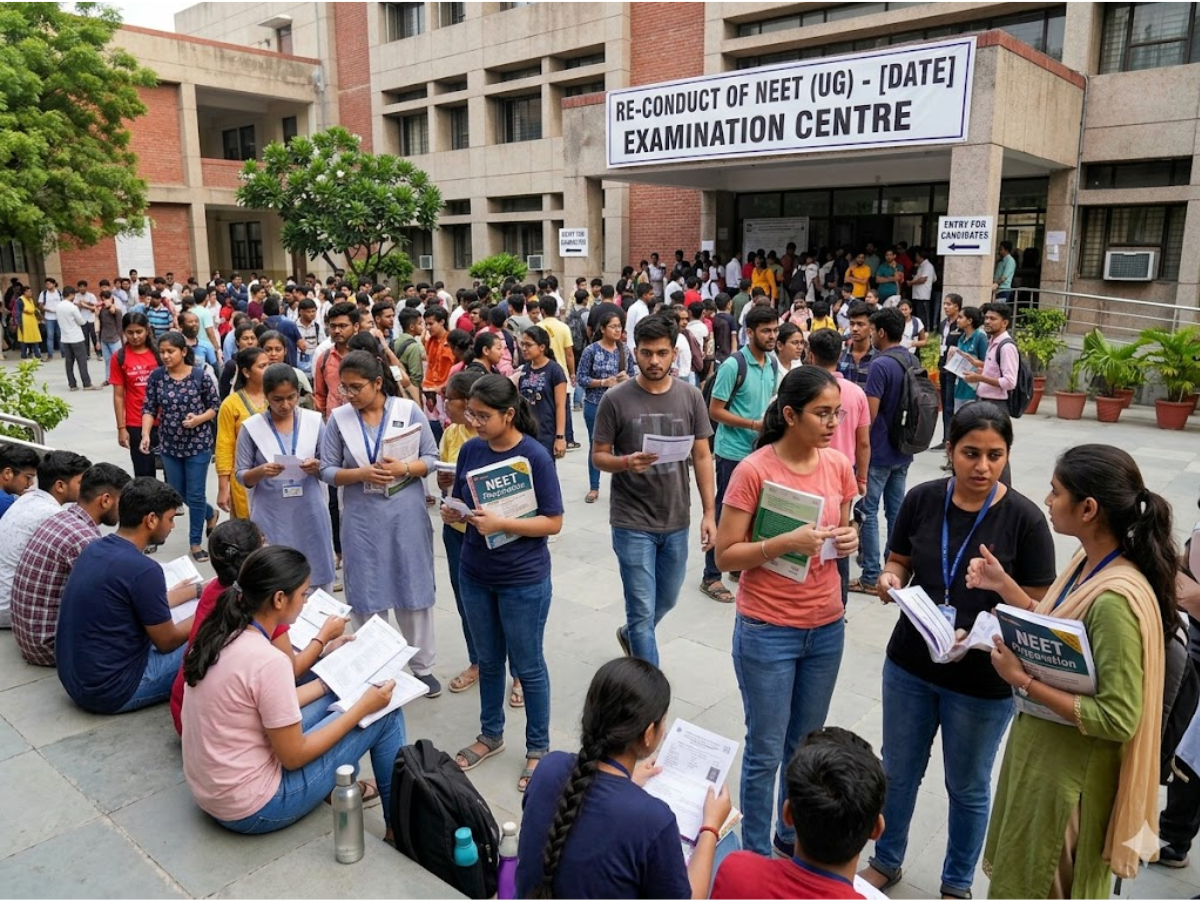
New Delhi: Amid unprecedented security arrangements and intense public scrutiny, thousands of medical aspirants across India appeared for the NEET-UG re-examination on Saturday, marking a crucial moment in the country’s efforts to restore confidence in one of its most important entrance tests. The re-test was conducted following the cancellation of the original examination after allegations of paper leaks, organized cheating, and irregularities triggered nationwide controversy.
Authorities deployed extensive security measures at examination centres across the country to ensure the integrity of the re-exam. Police personnel, surveillance teams, biometric verification systems, and special monitoring units were stationed at centres, while strict restrictions were imposed on electronic devices and unauthorized materials. Officials described the arrangements as among the most comprehensive ever implemented for a competitive examination in India.
The National Testing Agency (NTA), which faced severe criticism after the original examination was compromised, sought to reassure students and parents that every possible step had been taken to prevent malpractice. Examination papers were transported under enhanced security protocols, digital monitoring systems were activated, and local administrations were instructed to maintain constant vigilance throughout the process.
For the millions of students who prepare for NEET every year, the examination represents a gateway to medical colleges and future careers in healthcare. The cancellation of the earlier test had created enormous uncertainty, forcing aspirants to return to preparation mode after weeks of emotional stress and frustration. Many students described the re-examination as a second chance but also expressed disappointment that they had to endure another round of intense competition due to failures in the earlier process.
Parents and education experts noted that the controversy surrounding the original examination had affected student morale across the country. The decision to conduct a re-test was therefore viewed not only as an administrative necessity but also as an effort to protect the credibility of the medical admission system. Ensuring a fair examination was considered essential for maintaining trust in merit-based selection.
Security agencies remained on high alert throughout the day. Intelligence units monitored online platforms, messaging applications, and social media channels to prevent the circulation of fake question papers or misinformation. Authorities had earlier warned that any attempt to manipulate the examination process would be dealt with under stringent legal provisions.
The re-exam also became a test of institutional credibility for the NTA and the broader examination ecosystem. Over the past few years, concerns regarding paper leaks and examination fraud have emerged in several competitive tests, leading to growing demands for stronger safeguards and greater accountability. The successful conduct of the NEET re-test is therefore being seen as critical to restoring public confidence.
Medical education experts argue that the stakes are particularly high because NEET determines admission to thousands of undergraduate medical seats across the country. Any compromise in the fairness of the examination can have long-term consequences for students, educational institutions, and the healthcare sector itself.
Despite the heightened security environment, reports from many centres indicated that the examination process remained largely smooth and orderly. Students were subjected to rigorous verification procedures before entering examination halls, while invigilators closely monitored activities throughout the test duration.
The government has repeatedly emphasized that maintaining the integrity of national examinations is a priority. Following the original controversy, several investigations were launched, multiple arrests were made, and agencies were tasked with identifying those responsible for alleged paper leaks. Officials maintain that the re-examination is part of a broader effort to ensure accountability and prevent similar incidents in the future.
As students emerged from examination centres, discussions quickly shifted from security arrangements to question difficulty, expected cut-offs, and admission prospects. For many aspirants, months of preparation and uncertainty have now culminated in another opportunity to compete fairly for a place in India’s highly sought-after medical institutions.
While the final assessment of the re-test’s success will depend on its outcome and the absence of fresh controversies, the day represented an important attempt to rebuild trust in a system shaken by allegations of malpractice. For students, parents, and policymakers alike, the hope is that the examination marks the beginning of a more secure and transparent era in India’s competitive testing framework.
The focus now shifts to evaluation, results, and admissions. But beyond rankings and scores, the NEET-UG re-examination will be remembered as a test not only of students’ knowledge but also of the country’s ability to safeguard the credibility of its educational institutions.