Myanmar Assures India Its Territory Will Not Be Used Against New Delhi’s Security Interests
By ZPLUSE STAFF
•
Tuesday, June 2, 2026
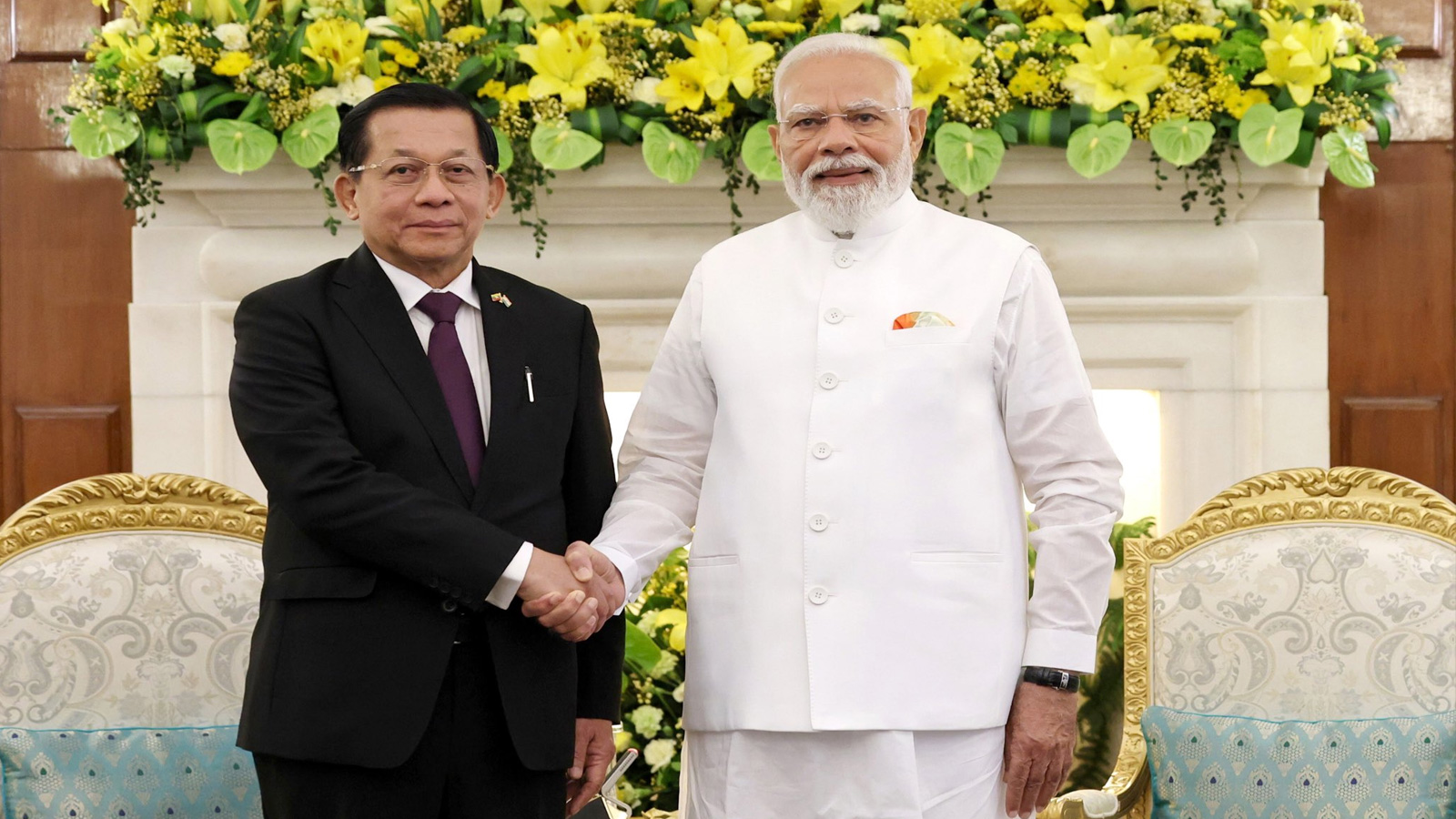
New Delhi: In a significant diplomatic and security assurance for India, Myanmar President U Min Aung Hlaing has stated that Myanmar will not allow its territory to be used for activities harmful to India’s security interests. The assurance came during his high-profile visit to New Delhi, where he held extensive talks with Prime Minister Narendra Modi covering border security, defence cooperation, connectivity projects, trade, energy, and regional stability. 
The statement carries considerable strategic importance because India and Myanmar share a sensitive 1,643-kilometre-long border that runs through the northeastern states of Arunachal Pradesh, Nagaland, Manipur, and Mizoram. For decades, India has faced challenges from insurgent groups that have occasionally used remote areas along the India-Myanmar border as safe havens, training grounds, or transit routes. The assurance from Naypyidaw is therefore being viewed as a strong commitment toward enhanced security cooperation between the two neighboring countries. 
During the talks, Prime Minister Modi reportedly raised concerns regarding armed groups operating near the border and the impact of Myanmar’s prolonged internal conflict on Indian border communities. Both sides emphasized the need to prevent the misuse of their territories for activities that threaten each other’s security and sovereignty. Foreign Secretary Vikram Misri later confirmed that Myanmar had reiterated its commitment that its soil would not be permitted to be used against India. 
The assurance comes at a crucial time for India’s northeastern security architecture. Ongoing instability inside Myanmar following years of internal conflict has created concerns about cross-border movement of armed groups, refugee flows, illegal trafficking networks, and organized criminal activities. Indian security agencies have been closely monitoring developments along the frontier, particularly in Manipur and Nagaland, where insurgent movements historically maintained links across the border. 
Myanmar occupies a uniquely important position in India’s strategic thinking. It serves as India’s land bridge to Southeast Asia and lies at the heart of New Delhi’s Act East Policy. Major connectivity initiatives such as the Kaladan Multi-Modal Transit Transport Project and the India-Myanmar-Thailand Trilateral Highway depend heavily on stable relations and security cooperation between the two countries. During the discussions, both sides reaffirmed their commitment to completing key connectivity projects and expanding economic engagement. 
Security cooperation was not the only major topic on the agenda. The leaders also discussed trade expansion, critical minerals, rare earth resources, energy cooperation, healthcare, education, and emerging technologies. India is increasingly interested in Myanmar’s significant reserves of rare earth minerals, which are becoming strategically important for industries ranging from electronics and electric vehicles to defence manufacturing. 
The visit also reflects broader geopolitical realities in the region. Myanmar remains a critical arena of strategic competition between India and China. Beijing has long maintained substantial influence through infrastructure investments, economic projects, and political engagement. By strengthening ties with Myanmar, India seeks not only to secure its northeastern borders but also to maintain its influence in a country that occupies a vital position between South Asia and Southeast Asia. 
Historically, Myanmar has consistently maintained that it does not permit anti-India insurgent groups to use its territory for attacks against India. However, difficult terrain, dense forests, and weak state control in certain regions have often complicated enforcement efforts. The latest assurance is therefore significant because it comes directly from Myanmar’s highest political leadership during a formal bilateral visit. 
For India, the statement represents more than a diplomatic gesture. It strengthens efforts to stabilize the Northeast, improve border management, combat insurgency networks, and enhance regional connectivity. For Myanmar, closer engagement with India offers economic opportunities, infrastructure cooperation, and a chance to diversify its international partnerships at a time of complex regional challenges. 
The visit ultimately underscores the growing strategic convergence between the two neighbors. As regional security challenges evolve and geopolitical competition intensifies across Asia, cooperation between India and Myanmar is becoming increasingly important not only for border security but also for the future of connectivity, trade, and stability across the wider Indo-Pacific region.