Israel and Lebanon Begin Historic Talks After U.S.-Led Mediation, Raising Hopes of Ending Decades of Hostility
By ZPLUSE STAFF
•
Thursday, June 4, 2026
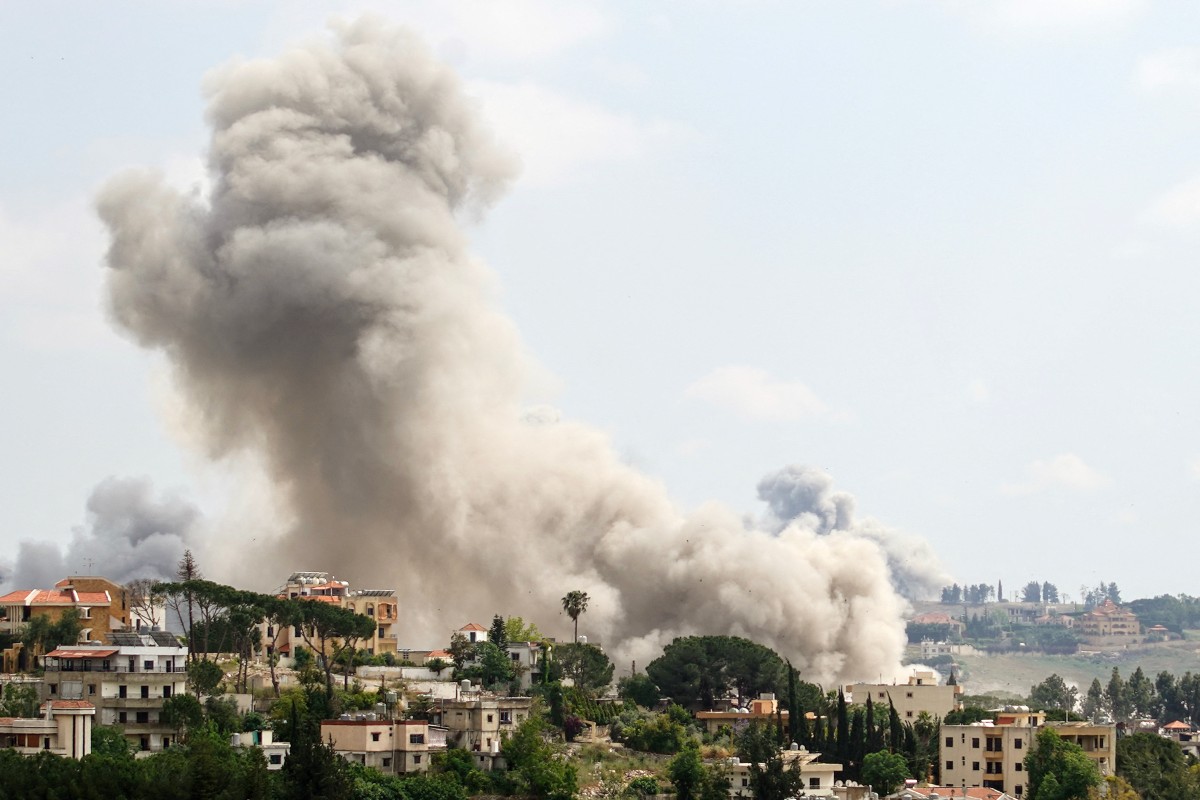
In a development that could potentially reshape the security architecture of the Middle East, Israel and Lebanon have reportedly begun direct negotiations following months of intense American diplomatic efforts aimed at preventing a full-scale regional war. The talks come after one of the most dangerous periods in recent Middle Eastern history, during which Israel and Hezbollah exchanged thousands of rockets, missiles, drone attacks, and artillery strikes, bringing the region dangerously close to a wider conflict involving Iran and multiple regional actors.
For many observers, the talks themselves are historic.
Israel and Lebanon have technically remained in a state of war since Israel’s creation in 1948. Unlike Egypt and Jordan, which signed peace agreements with Israel decades ago, Lebanon never established formal diplomatic relations with its southern neighbor. The border between the two countries has remained one of the most volatile fault lines in the Middle East, witnessing invasions, insurgencies, proxy wars, and repeated military confrontations.
The latest negotiations were made possible largely because of intensive American mediation. Washington has spent months engaging both governments while simultaneously working through regional partners to reduce tensions. The United States fears that another major Israel-Hezbollah war could destabilize the entire region, disrupt global energy markets, trigger massive humanitarian crises, and potentially draw in Iran, Syria, and other regional actors.
To understand the significance of these talks, it is necessary to understand the history behind the conflict.
Relations between Israel and Lebanon have been shaped largely by the rise of Hezbollah, the powerful Shiite militant and political organization backed by Iran. Hezbollah emerged during the Lebanese civil war and the Israeli occupation of southern Lebanon in the 1980s. Over the years, it evolved into one of the most heavily armed non-state military forces in the world, possessing tens of thousands of rockets, missiles, drones, and sophisticated military infrastructure.
For Israel, Hezbollah represents its most dangerous immediate security threat. Israeli officials have repeatedly argued that Hezbollah’s military capabilities exceed those of many conventional armies and pose a direct threat to millions of Israeli citizens living near the northern border.
For Lebanon, however, the situation is more complicated.
While Hezbollah remains designated as a terrorist organization by several countries, it is also a major political force inside Lebanon and holds significant influence within the country’s political system. This dual role has often complicated diplomatic efforts involving Israel and Lebanon.
The latest round of violence dramatically changed the strategic calculations of both sides.
Following months of fighting, Israel launched extensive military operations targeting Hezbollah positions, command centers, missile storage facilities, and logistical networks throughout southern Lebanon. Some of the most intense fighting occurred around the Litani River region, where Israeli forces pushed deeper into Lebanese territory than at any time in recent decades.
The military confrontation inflicted enormous costs on both sides.
Thousands of civilians were displaced.
Border towns were heavily damaged.
Economic activity collapsed across large sections of southern Lebanon.
Northern Israel also faced repeated missile attacks, forcing residents into shelters and disrupting daily life.
The conflict demonstrated a harsh reality for both governments: neither side could achieve complete military victory without paying an unacceptable price.
This realization helped create space for diplomacy.
The talks reportedly focus on several key issues.
The first and most immediate concern is border security.
Israel wants guarantees that Hezbollah forces and heavy weapons will remain away from the border region. Israeli officials have long argued that United Nations Resolution 1701, passed after the 2006 Lebanon War, was never fully implemented because Hezbollah gradually rebuilt military infrastructure south of the Litani River.
Lebanon, meanwhile, seeks guarantees regarding its territorial sovereignty and wants an end to repeated military operations and airspace violations.
A second major issue involves disputed border territories.
Several small but strategically important areas along the Israel-Lebanon frontier remain contested. Negotiators are reportedly discussing mechanisms for managing these disputes peacefully and reducing the risk of future military escalation.
Another important topic is economic cooperation.
Although formal normalization remains unlikely in the immediate future, there is growing recognition that stability could benefit both countries economically. Lebanon is currently experiencing one of the worst economic crises in modern history, while Israel seeks a more secure northern frontier to facilitate long-term development and investment.
Energy security is also playing an increasingly important role.
Recent years have seen significant interest in offshore natural gas reserves in the Eastern Mediterranean. Earlier U.S.-mediated maritime agreements between Israel and Lebanon demonstrated that practical cooperation is possible even in the absence of formal diplomatic relations.
Many analysts believe the current talks may eventually expand beyond security matters to include broader economic and energy cooperation frameworks.
The role of the United States remains central throughout the process.
Washington views stability between Israel and Lebanon as essential for its broader Middle East strategy. American policymakers hope that reducing tensions on Israel’s northern border will help prevent future regional wars and create conditions for wider diplomatic engagement across the region.
The talks also fit into a larger pattern of changing Middle Eastern geopolitics.
Over the past decade, traditional alliances and rivalries have undergone significant transformation. The Abraham Accords normalized relations between Israel and several Arab states. Saudi Arabia and Iran resumed diplomatic contacts. Regional powers increasingly prioritize economic development and stability over endless confrontation.
The Israel-Lebanon dialogue reflects this evolving environment.
However, enormous challenges remain.
The biggest obstacle continues to be Hezbollah itself.
Any lasting agreement will require addressing the group’s military presence and role in southern Lebanon. This issue remains highly sensitive because Hezbollah views itself as a resistance movement protecting Lebanon from external threats, while Israel sees it as a heavily armed proxy force backed by Iran.
Iran’s influence also remains a major factor.
As Hezbollah’s principal supporter, Tehran’s position could significantly influence the future success or failure of negotiations. Regional tensions involving Iran, Israel, and the United States continue to cast a shadow over any diplomatic progress.
Within Lebanon, political divisions further complicate matters.
The country remains deeply fragmented along sectarian and political lines. Any major agreement involving Israel could face domestic opposition from various factions.
Similarly, Israeli leaders face internal political pressures and security concerns that limit their negotiating flexibility.
Despite these obstacles, the very existence of direct talks represents a significant breakthrough.
For decades, relations between Israel and Lebanon were defined almost exclusively by military confrontation. Today, however cautiously, diplomacy is beginning to replace artillery fire as the primary means of engagement.
Whether these negotiations eventually produce a comprehensive agreement remains uncertain.
Yet the talks highlight a growing recognition on both sides that perpetual conflict offers diminishing returns while imposing enormous human and economic costs.
In a region long associated with war, mistrust, and geopolitical rivalry, even small diplomatic openings carry enormous significance.
And while peace remains a distant goal, the fact that Israel and Lebanon are sitting at the negotiating table rather than confronting each other on the battlefield may itself be one of the most important developments in the Middle East in recent years.