RCB Became Champions Again in IPL 2026: The Strategy, DK’s Masterplan and Kohli’s Everlasting Influence
By ZPLUSE STAFF
•
Monday, June 1, 2026
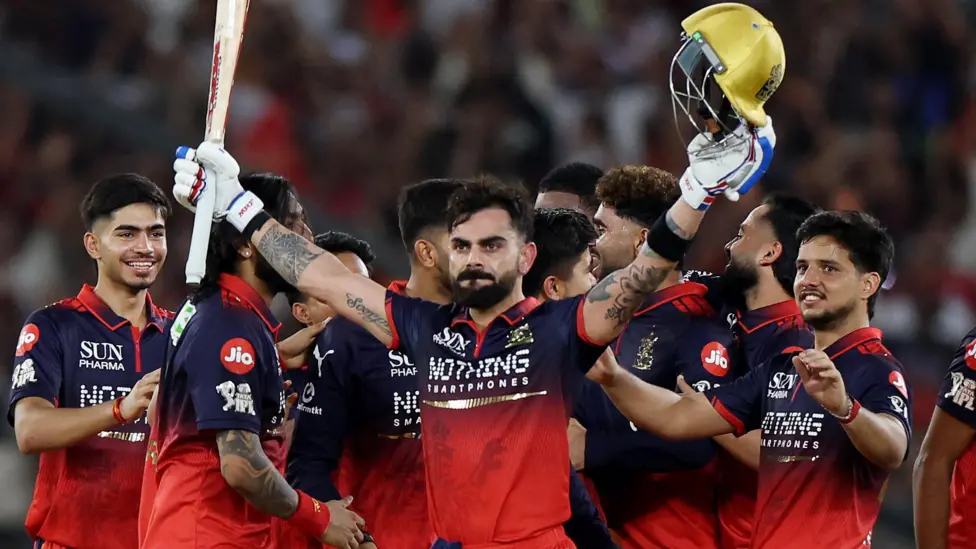
For years, Royal Challengers Bengaluru was cricket’s greatest paradox.
They had the biggest fanbase.
They had some of the greatest players.
They had Virat Kohli.
Yet trophies kept slipping away.
But IPL 2026 changed the narrative completely.
RCB did not merely win the title again — they defended it successfully, becoming one of the very few franchises in IPL history to win back-to-back championships. What once looked like a team built around emotion finally became a team built around structure, planning, leadership, and ruthless execution. 
The biggest difference was that RCB no longer depended on one superstar to carry the franchise.
For years, the team’s identity revolved around Kohli, AB de Villiers, or Chris Gayle. If the stars failed, RCB often collapsed.
The 2026 version was different.
This team was built with role clarity.
Every player understood exactly what was expected.
Phil Salt and Kohli provided aggressive starts.
Patidar controlled the middle overs.
Tim David handled finishing duties.
Krunal Pandya balanced the side.
Hazlewood and Bhuvneshwar controlled the bowling attack.
Young bowlers like Rasikh Salam Dar added unpredictability and energy. 
The franchise finally looked like a complete cricket team rather than a collection of stars.
One of the smartest decisions was retaining the core championship squad instead of making dramatic changes after the previous title-winning season. While many franchises rebuild aggressively after success, RCB trusted continuity. The management retained players who already understood the team culture and tactical system. That stability became one of the foundations of the 2026 triumph. 
Another major factor was captain Rajat Patidar.
Unlike high-profile captains who dominate headlines, Patidar brought calmness.
His leadership style removed pressure from the dressing room. Players repeatedly spoke about the clarity, freedom, and confidence inside the squad. Under Patidar, RCB played fearless cricket without appearing reckless. He became the bridge between experienced stars and younger players. 
But behind Patidar stood a much larger architect:
Head coach Andy Flower.
Many analysts believe Flower transformed the entire mentality of RCB.
For years, RCB carried the psychological burden of failure. Finals losses in 2009, 2011, and 2016 haunted the franchise. The fear of choking became part of its identity.
Flower systematically removed that baggage.
Players frequently credited him for creating a culture where every member of the squad felt valued. The focus shifted from celebrity culture to team culture. Even reserve players felt involved in the larger mission. That cultural transformation may have been the biggest reason RCB stopped behaving like underachievers and started behaving like champions. 
Yet no discussion about RCB is complete without Virat Kohli.
Even in 2026, Kohli remained the soul of the franchise.
Statistically, he was once again RCB’s highest run-scorer, producing over 600 runs during the season while maintaining an aggressive strike rate. More importantly, he evolved his T20 game to match modern cricket’s demands rather than relying solely on traditional anchor batting. 
In the final itself, Kohli delivered exactly when RCB needed him.
His unbeaten 75 against Gujarat Titans was not merely another innings.
It was a statement.
A reminder that even at 37, when the pressure becomes highest, Kohli remains one of the greatest big-match players in world cricket. 
But Kohli’s influence goes beyond runs.
Inside RCB, he functions almost like an institution.
Young players enter the dressing room already inspired by him.
His fitness standards define team culture.
His intensity defines fielding standards.
His loyalty defines emotional commitment.
Many former players have openly admitted that Kohli’s obsession with winning gradually changed the mentality of the franchise itself. What once looked like a glamorous team became a fiercely competitive one because of the standards he set over nearly two decades. 
That is why many fans call him RCB’s “poster boy.”
Not because of branding.
But because RCB and Kohli became inseparable identities.
Generations of fans grew up associating the franchise with him.
Even after finally winning titles, Kohli remains the emotional center of the team. When RCB wins, fans still instinctively look toward him first. 
Then comes another interesting factor:
The DK effect.
Although Dinesh Karthik was no longer the central player on the field, his influence inside the setup reportedly remained significant through mentoring, tactical discussions, and helping younger players understand pressure situations. Having experienced almost every possible IPL scenario across his career, DK became one of the key senior voices helping shape RCB’s modern cricketing culture.
His biggest contribution was helping create belief.
RCB teams of the past often carried emotional pressure.
The newer RCB setup carried competitive confidence.
That subtle shift mattered enormously.
The franchise stopped chasing history and started controlling matches.
The statistics reflected that dominance.
RCB topped the league stage, displayed batting depth, defended totals effectively, and won high-pressure knockout games with remarkable composure. They looked less like entertainers and more like serial winners. 
Perhaps the biggest achievement of IPL 2026 was that RCB finally escaped its old identity.
For years they were known as:
“Most popular team without a trophy.”
Then they became:
“The team that finally won.”
Now they are something far more dangerous:
A dynasty contender.
Back-to-back championships have placed RCB in a completely different category alongside IPL’s most successful franchises. 
And at the center of this transformation stood three pillars:
A smarter strategy.
A stronger team culture.
And Virat Kohli’s enduring influence.
Because while captains changed, squads evolved, and management shifted, one thing remained constant:
RCB’s journey from heartbreak to dominance was built around a man who never left.
And in 2026, the franchise he carried for nearly two decades finally became the champion team he always dreamed it could be.