How DK Shivakumar Became Congress’s Biggest Organisational Powerhouse in Karnataka And Slowly Challenged Siddaramaiah’s AHINDA Dominance
By ZPLUSE STAFF
•
Monday, June 1, 2026
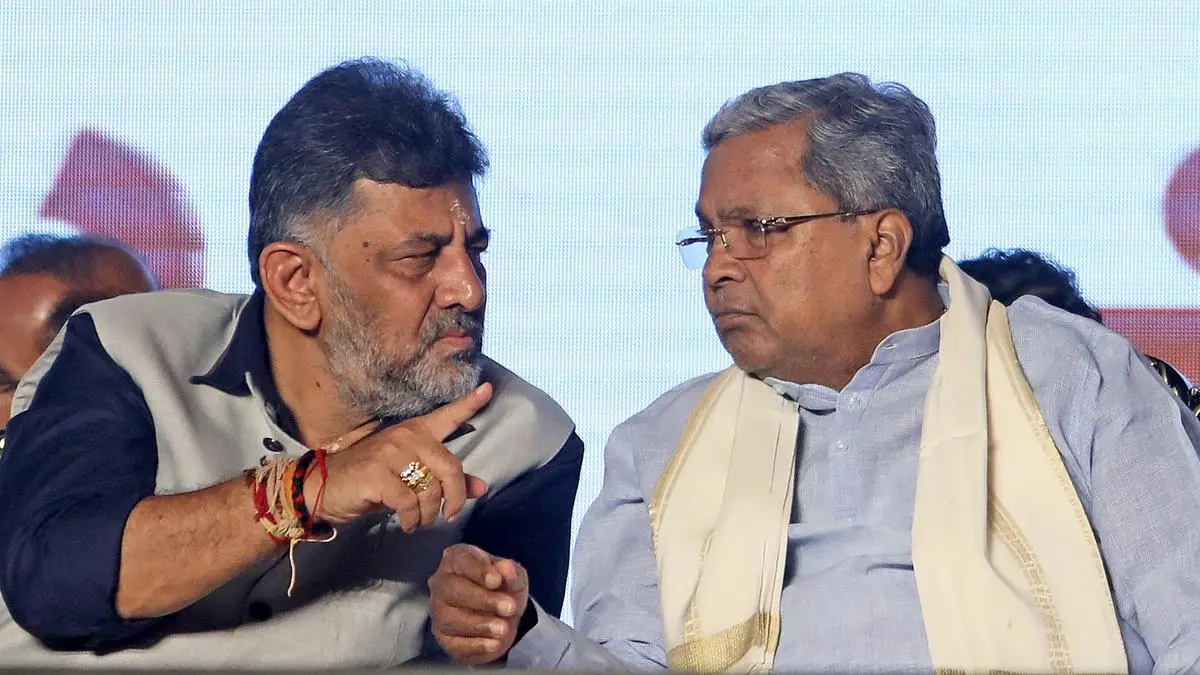
For nearly a decade, Karnataka Congress politics revolved around one towering figure — Siddaramaiah. As the architect of the powerful AHINDA social coalition comprising minorities, backward classes, and Dalits, Siddaramaiah transformed himself into one of the most influential mass leaders in the state and became the face of Congress’s welfare-driven politics. His electoral appeal, administrative experience, and grassroots support made him the natural center of power within Karnataka Congress. 
Yet while Siddaramaiah dominated the political narrative, another leader was quietly building something equally powerful behind the scenes — an organisational machine.
That leader was DK Shivakumar.
Today, the story of Karnataka Congress is no longer only about Siddaramaiah’s mass politics. It is increasingly about how DK Shivakumar rose from a regional strongman to become the party’s most powerful organisational strategist and eventually positioned himself as a serious challenger to Siddaramaiah’s dominance inside the Congress system itself. 
Unlike Siddaramaiah, whose strength emerged from welfare politics and social coalition-building, Shivakumar built his influence through organisation, resource mobilization, crisis management, and loyalty to the Congress high command. Over the years, he developed a reputation as the party’s most dependable troubleshooter — the leader who could protect legislators during political crises, negotiate difficult alliances, manage election logistics, and hold the organisation together during turbulent periods. 
His rise accelerated dramatically during some of Congress’s most difficult moments nationally.
When Congress governments faced instability, Shivakumar repeatedly emerged as the man trusted with rescue operations. From protecting Maharashtra legislators during political crises to hosting Gujarat Congress MLAs during the Rajya Sabha battle involving Ahmed Patel, he built a reputation within the party as someone who could deliver results under pressure. These operations significantly increased his standing with Sonia Gandhi, Rahul Gandhi, and the national leadership. 
Inside Karnataka, Shivakumar gradually transformed himself from a regional Vokkaliga leader into a statewide political operator.
His appointment as Karnataka Pradesh Congress Committee president in 2020 became the turning point. As KPCC chief, he focused aggressively on rebuilding the party organisation after years of setbacks. Booth-level restructuring, cadre mobilization, fundraising networks, district coordination, and grassroots outreach were strengthened under his leadership. Many Congress workers increasingly viewed him as the leader responsible for reviving the organisation after its difficult post-2018 phase. 
By the time Karnataka entered the 2023 Assembly election, the Congress effectively had two power centers.
Siddaramaiah remained the party’s biggest vote-puller among AHINDA communities.
DK Shivakumar had become the organisation’s strongest operational commander.
This dual leadership structure helped Congress return to power with a massive victory against the BJP. However, the success immediately created a new problem:
Who should control the government? 
The leadership battle began almost instantly after the election results.
Siddaramaiah’s supporters argued that his popularity and welfare-centric politics had delivered the victory.
Shivakumar’s camp insisted that the organisational revival and election machinery built under his leadership made the victory possible.
The Congress high command eventually chose Siddaramaiah as Chief Minister while appointing Shivakumar as Deputy Chief Minister and KPCC chief. Yet political observers widely believed an informal understanding regarding future leadership transition may have existed behind the scenes. 
That arrangement temporarily prevented open conflict.
But it did not remove ambition.
Over the next few years, Shivakumar steadily expanded his influence inside both government and party structures. Through control over organisational appointments, local leadership networks, and political coordination mechanisms, he strengthened his position across multiple districts. His supporters increasingly projected him not merely as a deputy leader but as the future face of Karnataka Congress. 
Meanwhile, Siddaramaiah continued relying on the AHINDA formula that had defined his political success for years.
The AHINDA coalition remained one of the most powerful social voting blocs in Karnataka politics. It helped Siddaramaiah maintain a strong support base among backward classes, minorities, and Dalits even as internal party competition intensified. Many Congress leaders feared that weakening Siddaramaiah too quickly could risk alienating this crucial social coalition. 
This created the central dilemma for Congress.
Siddaramaiah remained the strongest mass leader.
Shivakumar increasingly became the strongest organisational leader.
Both were indispensable.
Both wanted influence.
Both commanded loyal factions.
As a result, Karnataka Congress gradually evolved into a delicate balance between two parallel power structures. 
Over time, however, Shivakumar’s strategy became clearer.
Rather than directly confronting Siddaramaiah, he focused on expanding his acceptability beyond the Vokkaliga base. Statewide outreach campaigns, district-level mobilisation efforts, and broader leadership projection were designed to transform him from an organisational manager into a mass political figure. His recent Janashirvada outreach plans reflected exactly this ambition — building statewide legitimacy beyond factional politics. 
The rivalry eventually reached Delhi repeatedly as Congress leadership struggled to manage growing pressure from both camps. Meetings involving Siddaramaiah, Shivakumar, Mallikarjun Kharge, Rahul Gandhi, and senior leaders increasingly became necessary to prevent factional tensions from destabilizing the government. 
What makes Shivakumar’s rise remarkable is that he did not defeat Siddaramaiah through ideology or mass popularity alone.
He challenged him through organisation.
In Indian politics, mass leaders often dominate headlines. But organisational control frequently determines long-term power. Shivakumar understood that controlling party machinery, local networks, fundraising structures, and leadership appointments could eventually become as important as electoral charisma itself.
That strategy slowly transformed him from Congress’s crisis manager into Congress’s most powerful organisational force in Karnataka.
Whether he ultimately succeeds in fully replacing Siddaramaiah’s influence remains uncertain. Siddaramaiah’s AHINDA legacy still carries enormous electoral weight and emotional loyalty among large sections of Congress voters. 
But one reality is now impossible to ignore:
Karnataka Congress is no longer defined by a single leader.
It is defined by a contest between two different models of power.
One built on social coalition politics.
The other built on organisational control.
And in that battle, DK Shivakumar has already achieved something few once believed possible —
he transformed himself from a regional Congress strongman into a leader capable of challenging the dominance of Karnataka’s most powerful AHINDA icon.