Horror in Muzaffarnagar: 12 Bonded Labourers Rescued After Alleged Branding, Torture and Pit Bull Surveillance
By ZPLUSE STAFF
•
Thursday, June 25, 2026
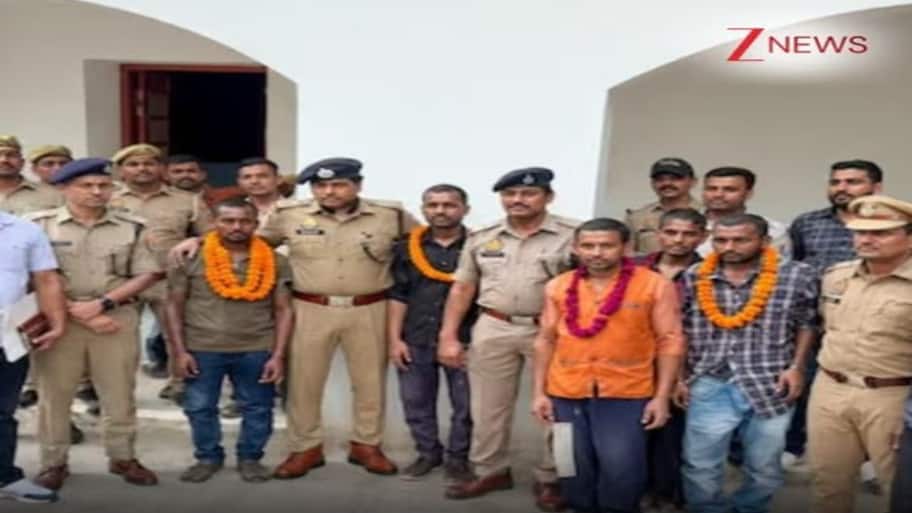
Muzaffarnagar: In a shocking case that has exposed the brutal reality of modern-day bonded labour, authorities in Uttar Pradesh’s Muzaffarnagar district rescued 12 labourers who were allegedly subjected to inhuman treatment, including branding with hot iron rods, physical torture, and confinement under the watch of aggressive pit bulls. The rescue operation has sparked outrage and renewed calls for stricter enforcement of anti-trafficking and bonded labour laws.
The victims, most of whom are believed to have been lured with promises of employment, were reportedly forced to work under harsh conditions for long hours with little or no pay. According to officials, the labourers were allegedly prevented from leaving the premises through intimidation, violence, and psychological abuse. Investigators said the accused employed pit bulls to guard the workers, making escape nearly impossible.
Police said several rescued workers bore visible injury marks, including burn scars that investigators believe were caused by branding with heated iron objects. Victims also alleged that they were regularly beaten, deprived of adequate food, and threatened with severe consequences if they attempted to flee or contact their families. Medical examinations have been ordered to document the injuries and support the ongoing investigation.
The rescue was carried out following a tip-off received by local authorities, who conducted a joint operation involving the district administration, police, and labour department officials. Upon entering the premises, officials found the workers living in deplorable conditions. They were immediately freed and shifted to a safe location, where they are receiving medical care, counselling, and assistance from government agencies.
Police have registered a case against the individuals allegedly running the operation and launched an investigation under multiple provisions of the Bharatiya Nyaya Sanhita, the Bonded Labour System (Abolition) Act, and other relevant labour and anti-trafficking laws. Authorities are also examining whether the victims were trafficked across state borders and whether a larger network of illegal labour exploitation is involved.
Officials said efforts are underway to identify the rescued workers’ families and facilitate their rehabilitation. The district administration has assured that the victims will receive financial assistance, legal aid, and support under government rehabilitation schemes designed for bonded labourers.
The incident has once again highlighted the persistence of bonded labour despite decades of legal prohibition in India. While the Bonded Labour System (Abolition) Act of 1976 outlawed the practice and cancelled all bonded debts, cases continue to surface, particularly in sectors involving brick kilns, agriculture, construction, factories, and small-scale industries where vulnerable workers are often exploited.
Human rights activists have described the Muzaffarnagar case as one of the most disturbing examples of labour exploitation in recent years. They argue that poverty, unemployment, migration, and lack of awareness continue to make economically weaker sections vulnerable to coercive labour practices. Experts have also called for stronger monitoring of workplaces, quicker intervention mechanisms, and stricter punishment for those involved in forced labour.
The National Human Rights Commission and labour rights organizations have repeatedly stressed that bonded labour is not merely an economic crime but a grave violation of human dignity and constitutional rights. They have urged governments to strengthen inspections, improve rehabilitation programmes, and ensure that rescued workers are reintegrated into society without fear of retaliation.
For the survivors, however, the rescue marks the end of a prolonged ordeal marked by fear, violence, and exploitation. As investigators continue gathering evidence and recording witness statements, authorities hope the case will not only bring the perpetrators to justice but also expose any wider trafficking or bonded labour network operating in the region.
The Muzaffarnagar rescue serves as a stark reminder that despite significant legal safeguards, forced labour remains a harsh reality for many vulnerable workers. The case has reignited demands for stronger enforcement, greater public vigilance, and sustained efforts to eradicate bonded labour from every corner of the country.