Fingerprint Scanner in Every Pocket: New Mobile App Gives Police Instant Biometric Identification Power
By ZPLUSE STAFF
•
Saturday, June 20, 2026
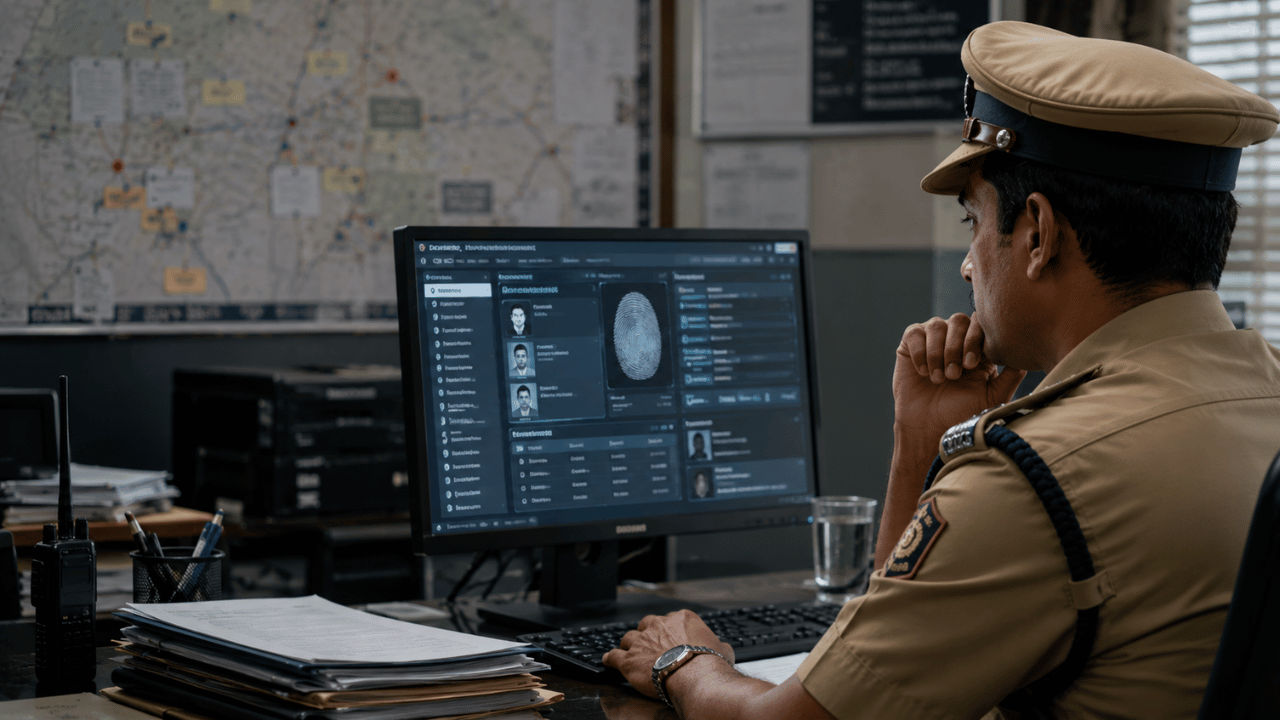
New Delhi: In a major technological upgrade for India’s law enforcement and investigative agencies, police personnel and probe agencies are set to gain access to a new mobile application that can instantly scan and verify fingerprints in the field. The initiative is expected to significantly enhance criminal investigations, speed up suspect identification, and reduce dependence on traditional forensic procedures that often require transporting individuals to police stations or laboratories.
The newly developed application allows authorized personnel to capture fingerprints using portable biometric devices connected to smartphones or tablets. Once scanned, the fingerprints can be matched against centralized criminal databases in real time, enabling officers to verify identities within minutes. Officials believe the technology will revolutionize policing by bringing advanced forensic capabilities directly to crime scenes, checkpoints, border areas, and field operations.
Traditionally, fingerprint verification has been a time-consuming process involving physical records, specialized equipment, and forensic laboratories. Investigators often had to wait hours or even days for confirmation. The new system dramatically shortens this timeline by integrating mobile technology with digital criminal databases, allowing officers to receive instant results while remaining in the field.
The application is expected to be particularly useful in cases involving unidentified individuals, repeat offenders, fugitives, and suspects attempting to conceal their identities using forged documents. By comparing fingerprints against existing records, law enforcement agencies can quickly determine whether an individual has a criminal history, outstanding warrants, or connections to ongoing investigations.
Security experts believe the technology could prove invaluable in combating organized crime, terrorism, human trafficking, illegal immigration, and cybercrime-related investigations. In many cases, rapid identification is critical to preventing suspects from escaping or destroying evidence. Real-time biometric verification provides investigators with a powerful tool to make informed operational decisions.
The system has reportedly been integrated with the National Automated Fingerprint Identification System (NAFIS), India’s nationwide biometric database developed by the National Crime Records Bureau (NCRB). NAFIS contains millions of fingerprint records collected from criminal cases across the country, enabling seamless sharing of information between state and central law enforcement agencies. The integration ensures that officers can access a vast repository of biometric data regardless of where an individual was originally registered.
Beyond criminal investigations, the application may also assist in identifying missing persons, disaster victims, unidentified bodies, and individuals suffering from memory-related conditions. Authorities believe that faster identification processes can improve humanitarian responses and provide closure to affected families.
The introduction of mobile fingerprint scanning reflects a broader trend toward technology-driven policing in India. Over the past decade, law enforcement agencies have increasingly adopted artificial intelligence, facial recognition systems, predictive analytics, digital surveillance tools, and integrated criminal databases to enhance investigative capabilities. The new fingerprint application represents another step toward creating a modern, data-driven policing ecosystem.
Officials emphasize that strict safeguards have been incorporated into the system to protect data privacy and prevent misuse. Access will be limited to authorized personnel, while biometric information will remain encrypted and subject to existing legal frameworks governing criminal databases and personal information.
The deployment comes at a time when security agencies are dealing with increasingly sophisticated criminal networks that frequently exploit digital technologies and forged identities. In such an environment, the ability to instantly verify an individual’s identity can provide a decisive advantage to investigators and frontline police personnel.
For India’s law enforcement agencies, the new application represents more than just a technological convenience. It signals the arrival of mobile forensics as a routine part of policing, where critical biometric information can be accessed anytime and anywhere. As the system is rolled out across the country, authorities hope it will improve investigation efficiency, strengthen public safety, and contribute to faster and more accurate criminal justice outcomes.
With fingerprint scanners now effectively fitting into a police officer’s pocket, the future of field-based biometric identification has arrived, bringing forensic science closer to the front lines of law enforcement than ever before.