Equal Seats for Every State’: Supriya Sule’s Delimitation Proposal Ignites Nationwide Political Debate
By ZPluse Staff
•
Thursday, July 16, 2026
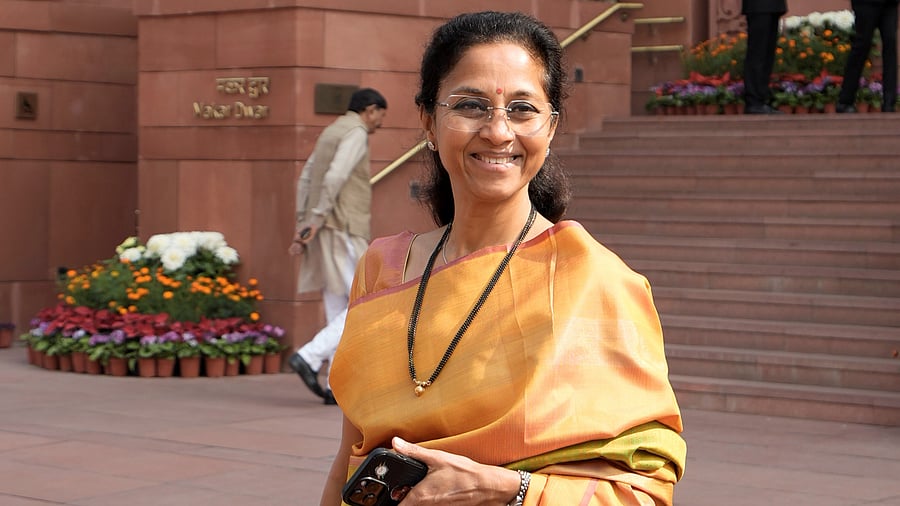
New Delhi: A fresh proposal to reshape India’s electoral map has reignited the politically sensitive debate over delimitation, with Nationalist Congress Party (Sharad Pawar faction) leader Supriya Sule suggesting that every state should receive an equal 50% increase in Lok Sabha seats, irrespective of population growth. The remark has sparked nationwide discussions over representation, federal balance, and the future of India’s parliamentary democracy.
Delimitation—the process of redrawing parliamentary and assembly constituencies based on population—is expected to become one of the most consequential political exercises after the constitutional freeze ends. While the Constitution envisions representation broadly linked to population, several southern and northeastern states have expressed concerns that they could lose political influence because they successfully controlled population growth over the past decades.
Against this backdrop, Sule argued that Parliament should explore a formula under which every state receives a uniform 50% increase in Lok Sabha seats. Supporters of the idea say such a model would preserve the existing balance of power between states while still expanding representation in the world’s largest democracy.
The proposal has immediately triggered intense political reactions. Advocates believe a uniform increase would reward states that invested heavily in education, healthcare, and family planning instead of penalizing them through reduced parliamentary influence. They argue that India’s federal structure must recognize developmental achievements alongside demographic realities.
Critics, however, contend that equal seat expansion for every state would move away from the democratic principle of proportional representation. They argue that rapidly growing states with larger populations should naturally receive greater representation in Parliament to ensure that every citizen’s vote carries similar weight.
The delimitation debate has become increasingly significant as India’s population has crossed 1.4 billion, placing enormous pressure on existing parliamentary constituencies. Many Lok Sabha seats today represent far more voters than they did when constituency boundaries were last comprehensively redrawn, raising concerns about equitable representation and governance.
Political analysts describe the issue as one of the defining constitutional challenges of the coming decade. Any future delimitation exercise will require balancing competing priorities—population-based representation, cooperative federalism, regional equity, and political stability. Finding a consensus among states with vastly different demographic trends is expected to be one of the toughest tasks before Parliament.
Beyond electoral arithmetic, the debate touches the broader question of India’s federal compact. Southern states have repeatedly argued that they should not be disadvantaged for achieving lower fertility rates, while several northern states maintain that democratic representation must continue to reflect population size.
Any proposal to significantly alter seat allocation would likely require broad political consensus and careful constitutional consideration. With differing viewpoints emerging across party lines and regional interests, delimitation is expected to remain at the centre of national political discourse in the years ahead.
Supriya Sule’s proposal has therefore done more than revive an old constitutional discussion it has reopened a fundamental debate about how the world’s largest democracy should balance population, fairness, and federalism in the decades to come. Whether Parliament ultimately chooses proportional redistribution, uniform expansion, or another compromise model, the outcome will shape India’s political landscape for generations.