Diplomacy Under Pressure: U.S.-Iran Talks Begin in Switzerland as Hormuz Crisis Threatens Global Economy
By ZPLUSE STAFF
•
Sunday, June 21, 2026
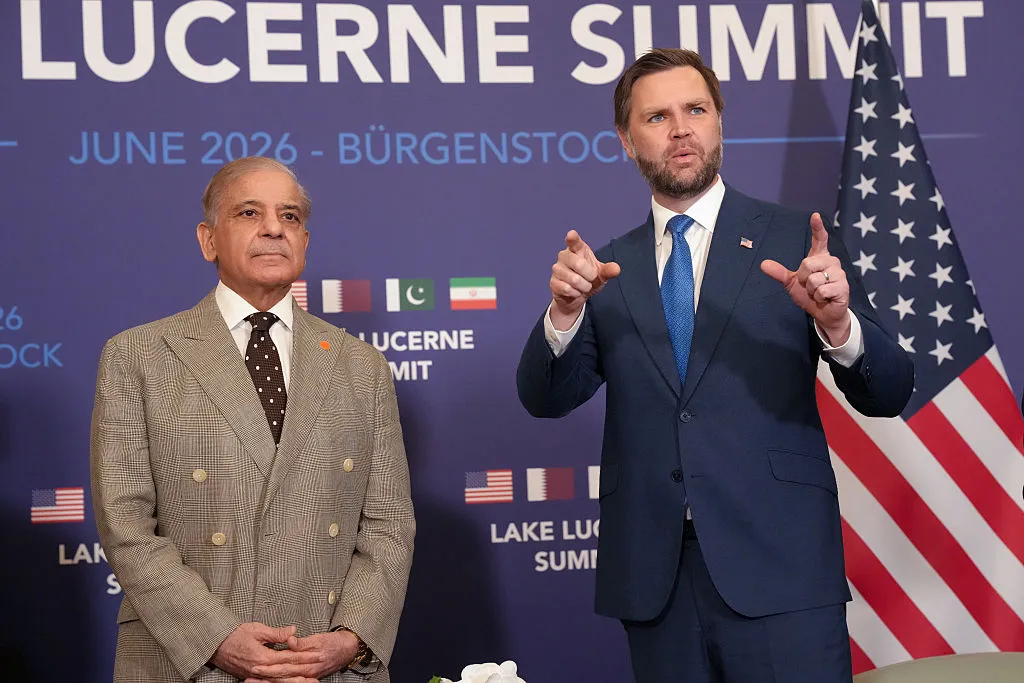
Geneva: High-stakes negotiations between the United States and Iran have commenced in Switzerland amid renewed uncertainty over the Strait of Hormuz, placing global diplomacy, energy security, and regional stability under intense scrutiny. The talks, being held at the Swiss resort of Bürgenstock, are aimed at transforming a fragile interim agreement into a broader framework capable of ending months of conflict and preventing a fresh escalation across the Middle East.
The negotiations come at a particularly delicate moment. Just days after Washington and Tehran signed a memorandum of understanding intended to reduce hostilities, Iran announced that the Strait of Hormuz would remain closed, accusing the United States of failing to ensure a ceasefire in Lebanon. Tehran argues that continued Israeli military operations against Hezbollah violate the spirit of the agreement and justify its decision to maintain pressure on one of the world’s most strategically important waterways.
The Strait of Hormuz occupies a unique position in the global economy. Connecting the Persian Gulf to international waters, it serves as a critical transit route for a substantial share of the world’s oil and liquefied natural gas exports. Any disruption to shipping through the narrow passage immediately affects energy markets, freight costs, insurance premiums, and broader economic sentiment. As a result, developments in the strait are being watched as closely as the negotiations themselves.
Leading the American delegation is Vice President JD Vance, while Iran’s team includes senior political, economic, and energy officials. The composition of both delegations reflects the broad scope of the negotiations, which extend beyond security issues to include sanctions relief, frozen Iranian assets, energy exports, nuclear restrictions, and regional conflict management. Mediators from Pakistan and Qatar are also participating in an effort to bridge deep differences between the two sides.
A major focus of the talks is expected to be the future of Iran’s nuclear programme. While Tehran has reiterated that it is not seeking nuclear weapons, it continues to insist on its right to enrich uranium for peaceful purposes. Washington, meanwhile, is seeking stronger guarantees, verification mechanisms, and long-term commitments designed to prevent any future weaponization of Iran’s nuclear capabilities. These issues remain among the most difficult and politically sensitive aspects of the negotiations.
The Lebanon conflict has emerged as another major obstacle. Iran has made it clear that Israeli military operations against Hezbollah will be a central issue in the discussions. The first clause of the memorandum of understanding reportedly called for a ceasefire across all fronts, yet fighting in Lebanon has continued, creating doubts about the durability of the broader peace process. Tehran’s decision to link Hormuz access with developments in Lebanon demonstrates how interconnected the region’s various conflicts have become.
Adding to the complexity is the conflicting narrative surrounding the Strait of Hormuz itself. While Iranian authorities and the Revolutionary Guard have declared the waterway closed, U.S. Central Command maintains that commercial shipping continues to move through the strait and that American forces are actively monitoring the area to ensure freedom of navigation. These contradictory claims have created uncertainty in global markets and raised questions about the actual situation on the ground.
Financial markets are closely tracking the outcome of the negotiations. Energy traders fear that a prolonged closure or even uncertainty surrounding Hormuz could trigger another surge in oil and gas prices. Countries heavily dependent on Middle Eastern energy supplies are particularly concerned, while shipping companies are reassessing routes and security arrangements in response to the evolving situation.
For both Washington and Tehran, the talks represent a critical test of political will. The United States seeks regional stability without becoming entangled in another prolonged Middle Eastern conflict, while Iran hopes to secure economic relief, regain access to global markets, and preserve key elements of its strategic autonomy. Success could pave the way for broader normalization and economic recovery; failure could revive tensions and further destabilize an already volatile region.
The international community is watching closely because the implications extend far beyond U.S.-Iran relations. The future of energy markets, regional security, maritime trade, and nuclear non-proliferation may all be influenced by what happens in Switzerland over the coming days. A breakthrough could reduce geopolitical risk and restore confidence, while a collapse in negotiations could deepen uncertainty and reignite fears of a wider regional confrontation.
As negotiators sit across the table in Switzerland, the contrast could not be sharper: diplomacy is moving forward, yet one of the world’s most important maritime chokepoints remains at the center of a dangerous geopolitical dispute. Whether the talks produce lasting progress or merely postpone another crisis will likely determine the trajectory of the Middle East in the months ahead.