Can Messi’s Argentina Defend the World Cup in 2026?
By ZPLUSE STAFF
•
Monday, June 1, 2026
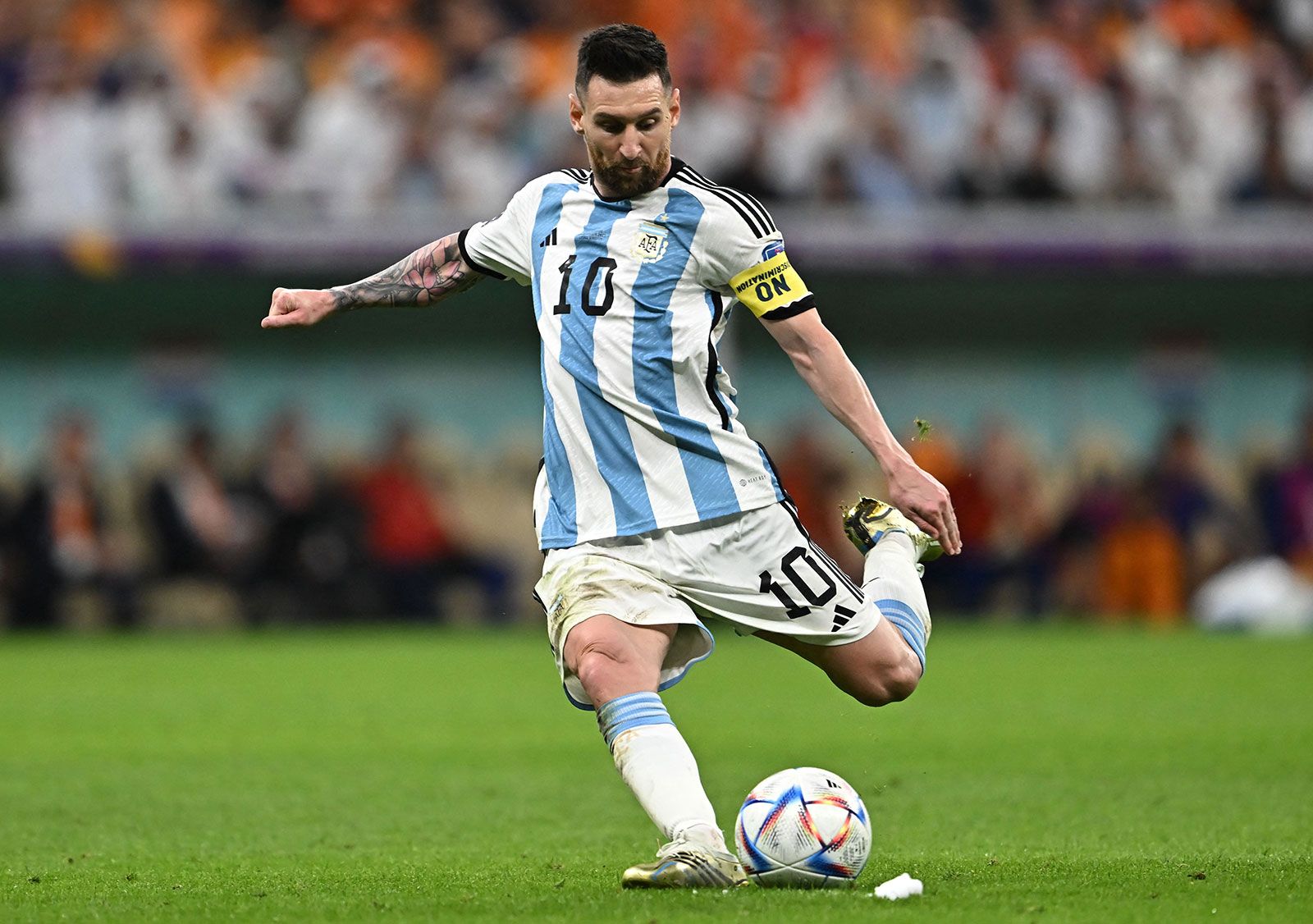
As the FIFA World Cup begins across the United States, Mexico, and Canada, Argentina enters the tournament not merely as defending champions but as one of the strongest contenders to lift the trophy once again. History shows that defending a World Cup title is among the most difficult achievements in football, yet this Argentine side possesses many of the qualities required to challenge for back-to-back championships for the first time since Brazil achieved the feat in 1962.
One of Argentina’s greatest strengths is continuity. Unlike many World Cup-winning teams that undergo major rebuilding phases after success, Argentina has managed to retain the core of the squad that won the title in Qatar in 2022. Players such as Emiliano Martinez, Cristian Romero, Rodrigo De Paul, Enzo Fernandez, Alexis Mac Allister, Julian Alvarez and Lautaro Martinez remain central figures in the team. Having experienced the pressure and demands of winning a World Cup together, this group enters the tournament with a level of chemistry and confidence that few rivals can match.
The presence of Lionel Scaloni on the sidelines is another major advantage. Since taking charge of the national team, Scaloni has transformed Argentina from a talented but inconsistent side into a disciplined and tactically flexible unit. Under his leadership, Argentina has won the Copa America, Finalissima and World Cup while maintaining remarkable consistency against elite opposition. His ability to adapt tactics according to opponents makes Argentina one of the most difficult teams to prepare against in tournament football.
The midfield remains perhaps Argentina’s strongest department. Enzo Fernandez and Alexis Mac Allister have developed into world-class midfielders competing at the highest level in Europe, while Rodrigo De Paul continues to provide energy, aggression and tactical balance. This midfield combination allows Argentina to control possession, dictate tempo and dominate key areas of the pitch against almost any opponent.
Another reason Argentina remains dangerous is that the team is no longer entirely dependent on Lionel Messi. During previous World Cups, much of Argentina’s success depended heavily on Messi producing moments of brilliance. The current squad possesses far greater attacking depth. Julian Alvarez has matured into a complete forward capable of leading the attack, while Lautaro Martinez remains one of the most prolific strikers in world football. This gives Argentina multiple avenues to score goals even when Messi is not directly involved.
Defensively, Argentina continues to be among the strongest teams in international football. Cristian Romero has established himself as one of the best defenders in the world, while Emiliano Martinez remains arguably the most reliable tournament goalkeeper on the planet. His performances in knockout matches and penalty shootouts have repeatedly proven decisive, giving Argentina a significant psychological advantage in high-pressure situations.
The biggest storyline, however, remains Lionel Messi himself. At 38 years of age, this is likely to be his final World Cup appearance. While he may no longer possess the explosive physical abilities of his younger years, his vision, creativity, leadership and ability to influence decisive moments remain unmatched. Unlike Qatar 2022, Messi no longer carries the burden of doing everything himself. He is now surrounded by a mature, experienced and balanced squad capable of sharing responsibility.
Argentina’s biggest challenge may come from the strength of their rivals. France continues to possess extraordinary depth and talent, Spain has emerged as one of Europe’s most dynamic teams, England boasts a golden generation of players, while Brazil and Portugal both possess squads capable of winning the tournament. The expanded World Cup format also increases unpredictability and makes the road to the final even more demanding.
Another concern is age. Several key members of Argentina’s championship-winning generation are entering the latter stages of their careers. Maintaining fitness and intensity throughout a long tournament will be crucial. History has also shown that defending champions often struggle with expectations and pressure, as seen with Germany in 2018 and Spain in 2014.
Despite these challenges, Argentina remains one of the favorites because of something that cannot be measured by statistics alone: mentality. This is a team that knows how to win major tournaments. They have overcome adversity, survived knockout pressure, won penalty shootouts and performed on football’s biggest stage. The experience gained from those battles gives them an advantage that many younger squads simply do not possess.
As the World Cup begins in North America, Argentina enters the competition with a balanced squad, a world-class manager, elite midfielders, proven defenders, tournament-winning experience and the enduring brilliance of Lionel Messi. Defending the title will be extraordinarily difficult, but few teams in world football appear better equipped for the challenge.
If Messi remains fit and Argentina maintains the unity and resilience that carried them to glory in Qatar, the dream of retaining the World Cup may be far more realistic than many imagine. The champions arrive in 2026 not as a team living off past success, but as a team still capable of making history.